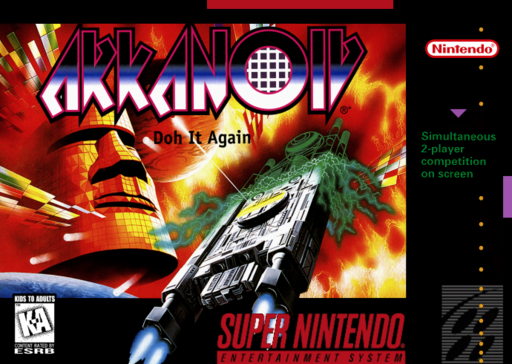
Arkanoid - Doh It Again
Arkanoid - Doh It Again is a Super Famicom puzzle game released in 1997 developed by Taito. It centers on rule recognition, spatial or logical judgment, and successive puzzle solving, with controls, information, and pacing arranged around television output, a directional pad, shoulder buttons, and a six-button controller.
- AI score · out of 10
- 8.0 / 10
About this game
Arkanoid - Doh It Again is a Super Famicom puzzle release centered on rule recognition, spatial or logical judgment, and successive puzzle solving. Compact stages add conditions and tighter constraints over time, with progress divided into stages, tasks, matches, or growth milestones that make its immediate goals understandable. Its value depends on whether these rules continue to create judgment and room for mastery rather than on campaign length or series recognition. Short campaigns are judged by repeat-challenge value, while longer ones are judged by variety, pacing, and recovery after failure. Graphics, audio cues, and state feedback need to support decisions directly, while sprite animation, scrolling, color, and chip-based audio jointly carry readability and atmosphere. The main genre-specific friction is that limited explanations, repetition, or abrupt difficulty can stall progress. In addition, password or battery saves, multiplayer accessories, manual dependence, regional language, and cartridge enhancement chips can affect original-hardware use. This description covers only this release and excludes emulator features, modern-port conveniences, and content from other platforms.
Collected in series
Arkanoid is Taito's arcade brick-breaking series, built around steering the paddle-like spacecraft Vaus and keeping an energy ball in play. Reading rebounds, catching power-ups and clearing the remaining blocks give each screen its own little battle of timing.
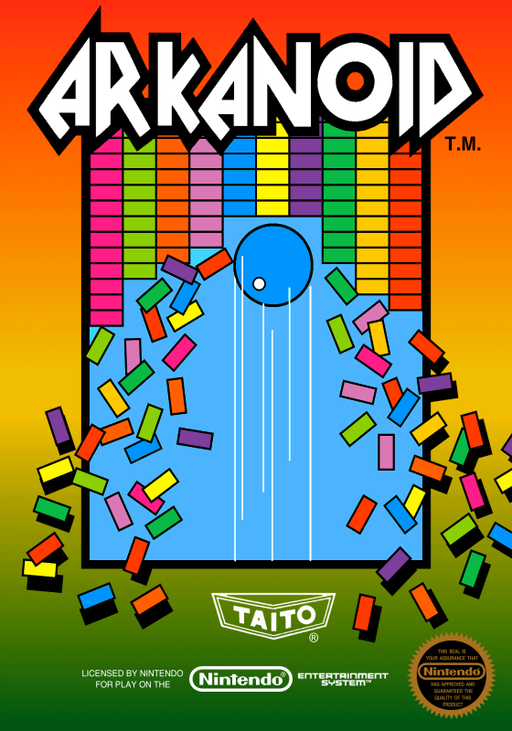
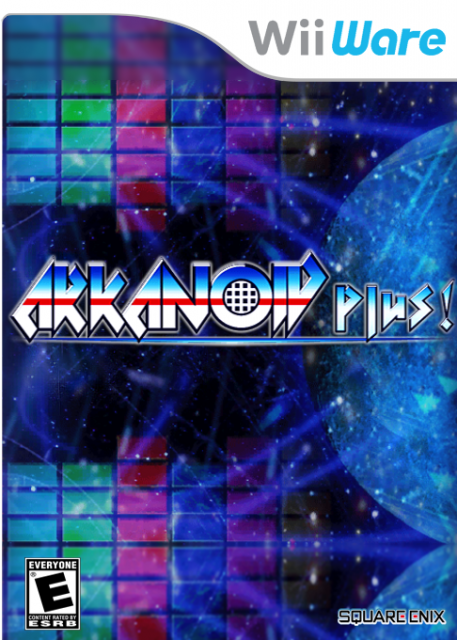
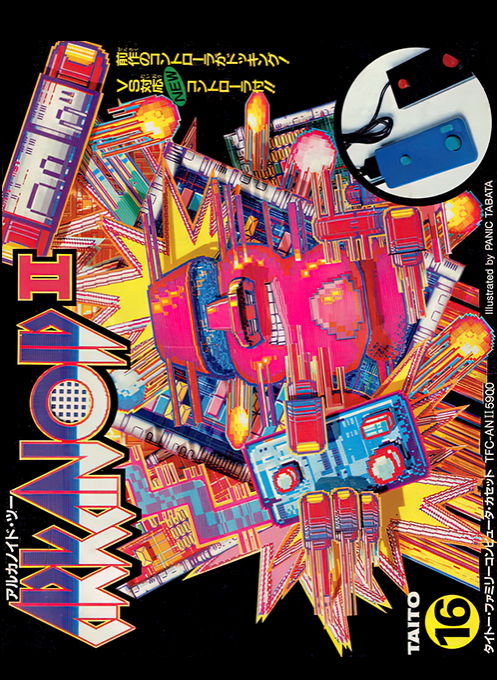
Recommended games
Related game recommendations on this platform
Super Famicom / SNES
AI review
AI reviews are subjective assessments, not player ratings. See each review for its evidence and limitations.Published date:
A substantial and responsive SNES brick-breaker whose later layouts sometimes overstay.
The Super Nintendo Arkanoid: Doh It Again preserves the immediate appeal of steering a paddle, judging rebounds and catching helpful capsules. Multi-hit and indestructible blocks, moving obstacles and boss encounters give that familiar loop more variety. At its best, a carefully aimed shot produces a satisfying chain of hits. Some late gold-block formations, however, leave only narrow paths and turn a test of control into a long wait for the right angle. The cartridge offers an unusually broad package: ninety-nine stages, passwords for continuation, alternating, cooperative and competitive two-player modes, and an editor for building new challenges. These additions make it more than a simple retelling of the arcade original, and sharing the game is often livelier than completing it alone. Animated bosses and decorative backdrops add character, though certain patterns obscure the small ball. Most ordinary stages rely on collision effects rather than continuous music. Adjustable paddle speed works with the normal controller, while the Super NES Mouse is optional. Firsthand SNES reports find movement smooth overall but mention rare apparent collision misses and a clumsy editor. This assessment concerns the 1997 SFC/SNES cartridge, not the PC edition or other Arkanoid games. It is easy to recommend to players who enjoy short arcade challenges, with a warning that seeing all ninety-nine stages takes more patience than the opening suggests.
Strengths
- Solid ricochet and capsule-based play
- Generous campaign, three two-player modes and level editor
- Responsive standard controls with optional mouse support
Weaknesses
- Some late gold-block layouts become drawn out
- Sparse ordinary-stage music and occasional visual clutter
- Minor editor and collision roughness
Who it is for: Brick-breaker fans who enjoy high-skill short sessions and local shared play.
Play notes: The SNES Mouse is optional; the score covers the original 16-bit cartridge only.
View scoring basis
| Dimension | Review state | Score | Weight |
|---|---|---|---|
| Dimension Ninety-nine stages, three two-player forms and an editor offer breadth, despite late slogs. | Reviewed | 8.3 / 10 | Not provided |
| Dimension Precise ricochets and power-ups remain engaging, with some late layouts testing patience. | Reviewed | 8.0 / 10 | Not provided |
| Dimension Colourful bosses help, but occasional visual clutter and sparse stage music show. | Reviewed | 7.4 / 10 | Not provided |
| Dimension Flexible pad or mouse control feels sound; rare collision and editor roughness remain. | Reviewed | 8.0 / 10 | Not provided |
Review sources
Not provided
Core information
- Developer
- Taito
- Release date
- 1997
- Platforms
- Super Famicom / SNES
- Content kind
- Game
- Release state
- Released
- Region
- Worldwide
- Official website
- Not provided
- Offline minimum players
- Not provided
- Offline maximum players
- Not provided
- Online minimum players
- Not provided
- Online maximum players
- Not provided
- Categories
- Puzzle · Primary genre
- Tags
- Fixed CameraPuzzle SolvingLow Entry Barrier2D GraphicsScience FictionReplayableSolo-friendlyShort SessionsPick-up and PlaySlow BurnMain Story Under 10 Hours
- Supported game languages
- Not provided
- Requires base game
- Not provided
- Standalone
- Not provided
- Age ratings
- Not provided
- Play modes
- Single player
- Perspectives
- Top-down
Release editions
- Super Famicom / SNESWorldwide1997
Game gallery
Sources
Not provided