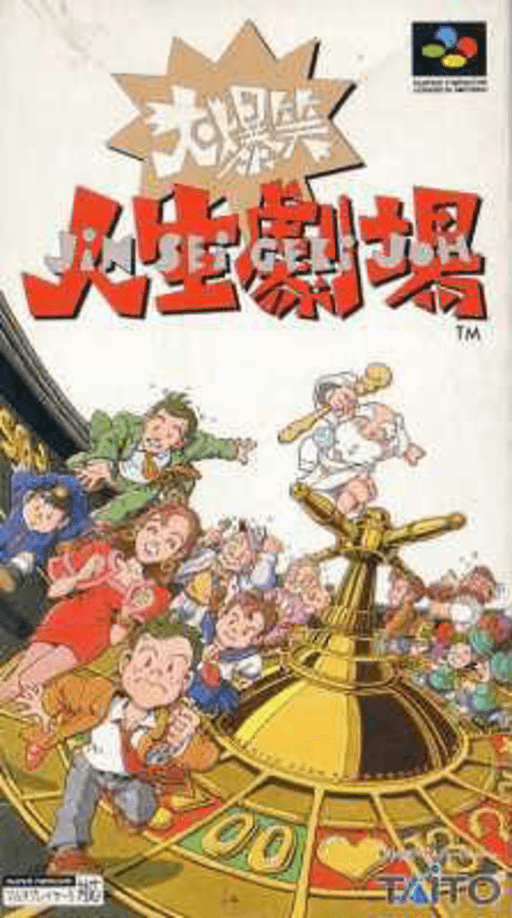
Daibakushou Jinsei Gekijou
Daibakushou Jinsei Gekijou is a Super Famicom card and board game released in 1992 developed by Taito. It centers on card or board-game rules, rules interaction, and board assessment, with controls, information, and pacing arranged around television output, a directional pad, shoulder buttons, and a six-button controller.
- AI score · out of 10
- 5.6 / 10
About this game
Daibakushou Jinsei Gekijou is a Super Famicom card and board release centered on card or board-game rules, rules interaction, and board assessment. Matches, decks, or board objectives create a repeatable strategy loop, with progress divided into stages, tasks, matches, or growth milestones that make its immediate goals understandable. Its value depends on whether these rules continue to create judgment and room for mastery rather than on campaign length or series recognition. Short campaigns are judged by repeat-challenge value, while longer ones are judged by variety, pacing, and recovery after failure. Card, board, and state readability determine usability, while sprite animation, scrolling, color, and chip-based audio jointly carry readability and atmosphere. The main genre-specific friction is that rules terminology, opponent pacing, and text density raise the entry barrier. In addition, password or battery saves, multiplayer accessories, manual dependence, regional language, and cartridge enhancement chips can affect original-hardware use. This description covers only this release and excludes emulator features, modern-port conveniences, and content from other platforms.
Collected in series
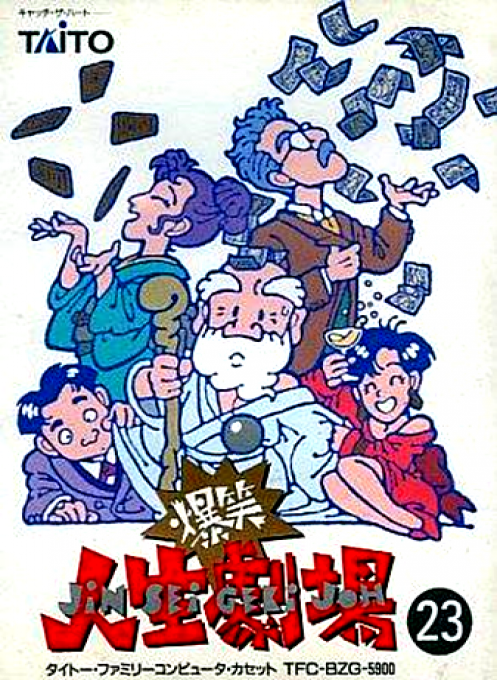
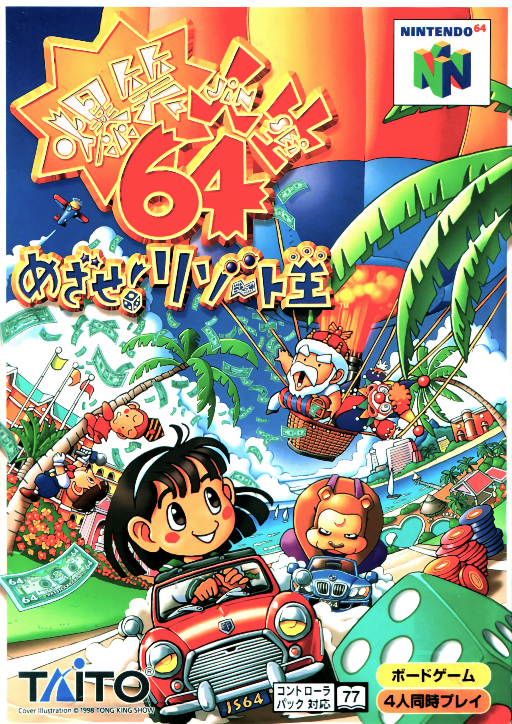
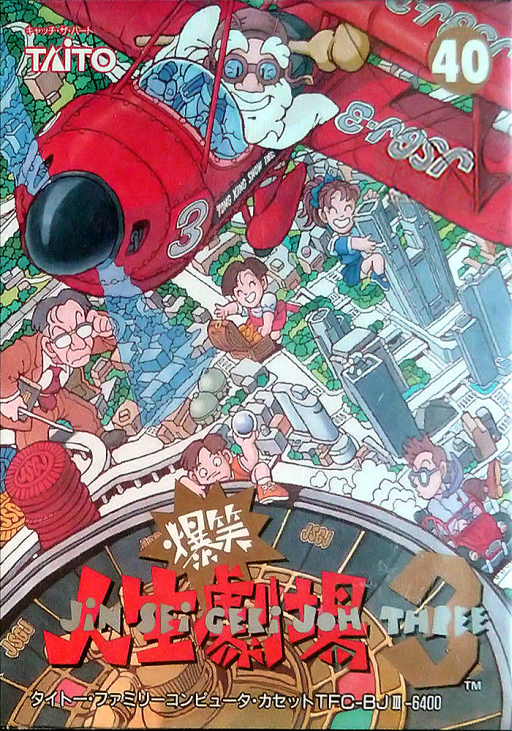
Bakushou!! Jinsei Gekijou is Taito’s comic life-board-game series. Roll through school, work and relationships as lucky breaks and embarrassing setbacks change your fortunes; some entries trade a whole lifetime for school days or life in old Edo.
Recommended games
Related game recommendations on this platform
Super Famicom / SNES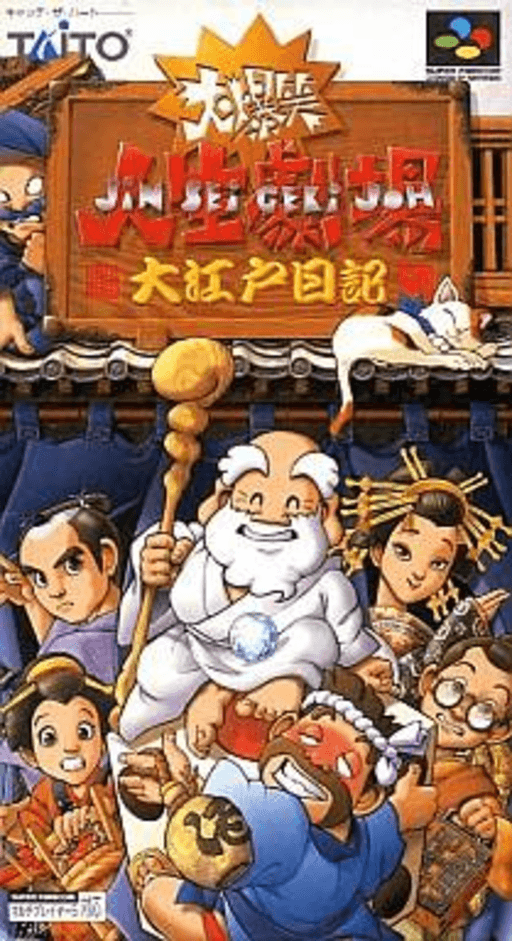

AI review
AI reviews are subjective assessments, not player ratings. See each review for its evidence and limitations.Published date:
An approachable party board with thin life-event payoffs
Daibakushou Jinsei Gekijou works best as a reason for friends to talk around a board. Roulette movement, readable event symbols and a wealth-based finish make its premise easy to follow. Penalty kicks and short races provide welcome interruptions, while moving everyone onward when one player reaches a goal keeps the session moving. The disappointment is how weakly its life systems connect. Jobs generate few events, income can arrive without employment, and custom faces disappear from event scenes. Mild jokes and parameter-based final comments offer little personal payoff. Its attractive graphics support a casual evening, but the limited event variation gives repeat play less momentum. Enjoy the social setting rather than expecting a rich simulation of different lives.
Strengths
- Readable board symbols and simple goals
- Competitive minigames break up turns
Weaknesses
- Weak links between career choices and rewards
- Custom faces and personal endings receive little payoff
Who it is for: Local groups seeking light board play and conversation rather than deep life simulation.
Play notes: This is the original 1992 game, not Dokidoki Jinsei Gekijou. Japanese events and the final wealth ranking are central.
View scoring basis
| Dimension | Review state | Score | Weight |
|---|---|---|---|
| Dimension Forced map transitions and minigames reduce waiting, but sparse events and endings weaken repeat sessions. | Reviewed | 4.7 / 10 | Not provided |
| Dimension Roulette and wealth competition invite interaction, but weak career-to-reward links limit meaningful life choices. | Reviewed | 5.6 / 10 | Not provided |
| Dimension Clean, appealing graphics are undercut by event faces that ignore the player's custom character. | Reviewed | 6.1 / 10 | Not provided |
| Dimension Distinct tile symbols and a flat board support readable turns, though the interface cannot repair shallow rule feedback. | Reviewed | 6.3 / 10 | Not provided |
Review sources
Not provided
Core information
- Developer
- Taito
- Publisher
- Taito
- Release date
- 1992
- Platforms
- Super Famicom / SNES
- Content kind
- Game
- Release state
- Released
- Region
- Worldwide
- Official website
- Not provided
- Offline minimum players
- Not provided
- Offline maximum players
- Not provided
- Online minimum players
- Not provided
- Online maximum players
- Not provided
- Categories
- Card & Tabletop · Primary genre
- Tags
- Turn-based TacticsCard Play2D GraphicsShort SessionsBoard and Tabletop PlaySlow Burn
- Supported game languages
- Not provided
- Requires base game
- Not provided
- Standalone
- Not provided
- Age ratings
- Not provided
- Play modes
- Not provided
- Perspectives
- Not provided
Release editions
- Super Famicom / SNESWorldwide1992
Game gallery
Sources
Not provided