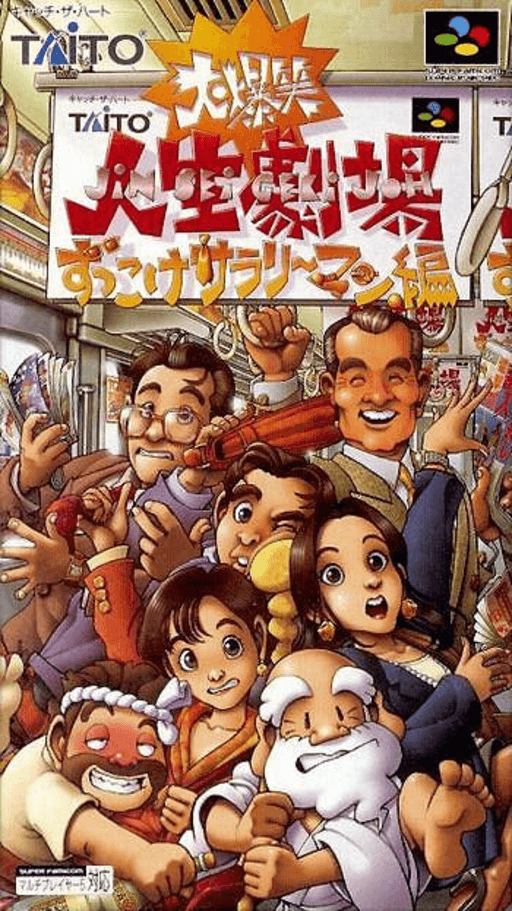
Daibakushou Jinsei Gekijou - Zukkoke Salaryman Hen
Daibakushou Jinsei Gekijou - Zukkoke Salaryman Hen is a Super Famicom card and board game released in 1995 developed by Act Japan. It centers on rules interaction, board assessment, and turn-by-turn decisions, with controls, information, and pacing arranged around television output, a directional pad, shoulder buttons, and a six-button controller.
- AI score · out of 10
- 6.7 / 10
About this game
Daibakushou Jinsei Gekijou - Zukkoke Salaryman Hen is a Super Famicom card and board release centered on rules interaction, board assessment, and turn-by-turn decisions. Matches, decks, or board objectives create a repeatable strategy loop, with progress divided into stages, tasks, matches, or growth milestones that make its immediate goals understandable. Its value depends on whether these rules continue to create judgment and room for mastery rather than on campaign length or series recognition. Short campaigns are judged by repeat-challenge value, while longer ones are judged by variety, pacing, and recovery after failure. Card, board, and state readability determine usability, while sprite animation, scrolling, color, and chip-based audio jointly carry readability and atmosphere. The main genre-specific friction is that rules terminology, opponent pacing, and text density raise the entry barrier. In addition, password or battery saves, multiplayer accessories, manual dependence, regional language, and cartridge enhancement chips can affect original-hardware use. This description covers only this release and excludes emulator features, modern-port conveniences, and content from other platforms.
Collected in series
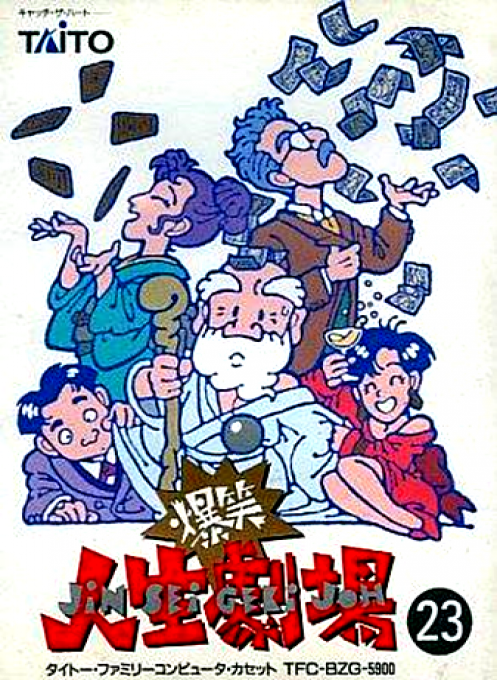
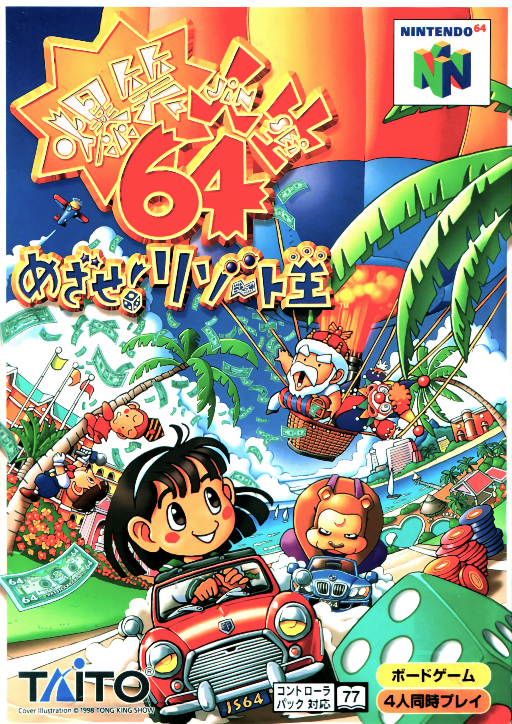
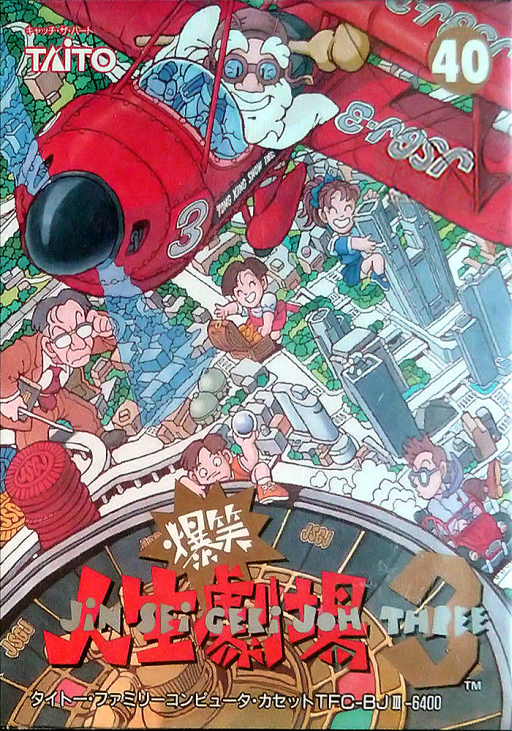
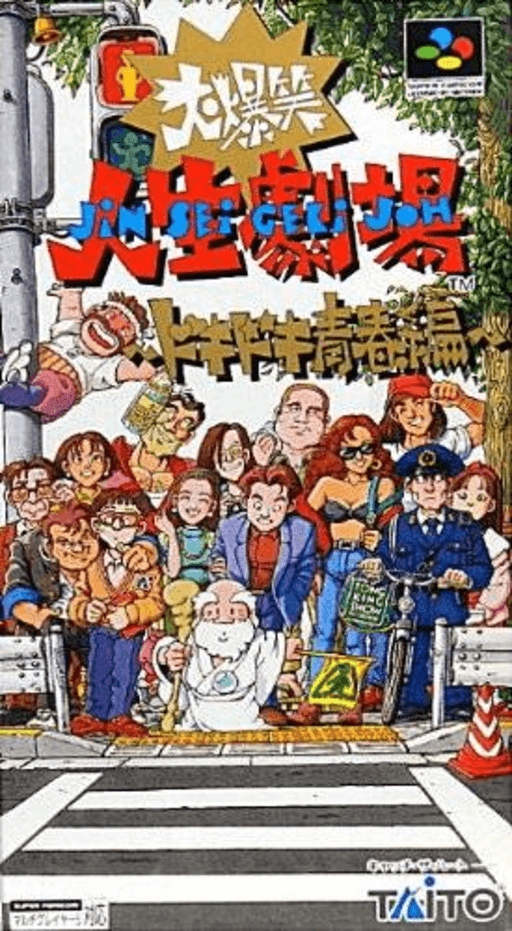
Bakushou!! Jinsei Gekijou is Taito’s comic life-board-game series. Roll through school, work and relationships as lucky breaks and embarrassing setbacks change your fortunes; some entries trade a whole lifetime for school days or life in old Edo.
Recommended games
Related game recommendations on this platform
Super Famicom / SNES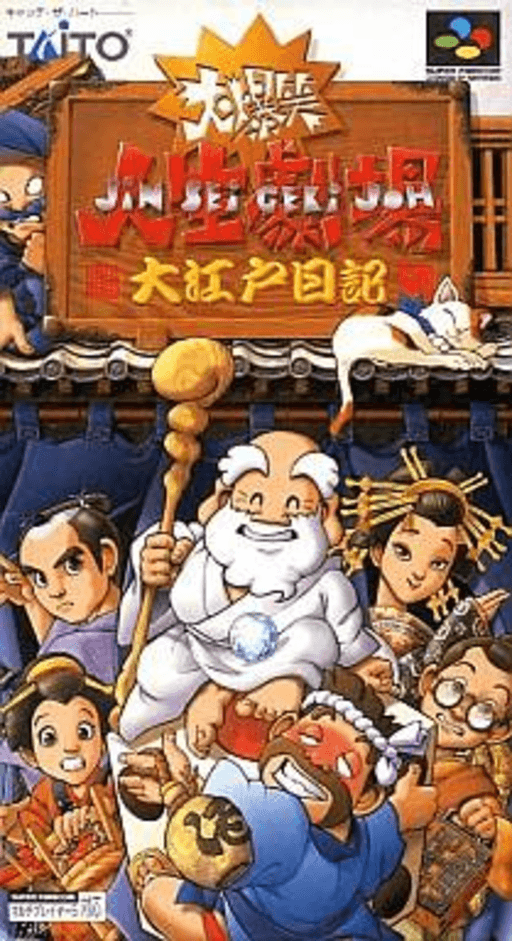

AI review
AI reviews are subjective assessments, not player ratings. See each review for its evidence and limitations.Published date:
Thoughtful life endings outshine a lengthy, luck-heavy contest.
Zukkoke Salaryman Hen turns promotion, romance and family into a competitive life story. Project timing, marriage costs and relationship choices give players something to manage beyond the dice, although luck matters heavily and familiar event answers can settle into predictable routes. Its most memorable touch comes after the rankings: wealth does not guarantee a happy retirement, while a lower-ranked character may find fulfilment with family. Marriage, children and career upheavals give each life stages worth following. Mandatory four-participant play and lengthy rounds, however, make exploring another path a substantial commitment. Saving and automatic progression ease that burden, but complicated relationships can still warrant notes. It suits patient readers interested in Japanese life stories more than anyone seeking a quick party round.
Strengths
- Career and family intertwine, with project timing and marriage costs creating concrete decisions.
- Life rankings and happy endings diverge, giving retirement stories meaning beyond accumulated wealth.
- Saving and automatic progression make lengthy rounds easier to accommodate.
Weaknesses
- Heavy dice luck and memorised favourable answers can narrow long-term choices.
- Mandatory four-participant play and long rounds discourage immediate replay.
- Complicated relationships may require separate notes to follow.
Who it is for: Patient board-game players comfortable reading Japanese and following career and family events, who value personal endings alongside competition.
Play notes: This covers the original SFC Salaryman game, without progress carried from the youth entry. Allow time for long rounds, use saving and automatic mode, and keep notes on complex relationships.
View scoring basis
| Dimension | Review state | Score | Weight |
|---|---|---|---|
| Dimension Marriage, later-life events and alternative routes give a round genuine variety. Mandatory four-participant play and long sessions, however, raise the cost of discovering more, and a player explicitly postpones another attempt. There is content worth seeing, but pacing weakens its replay appeal. | Reviewed | 5.9 / 10 | Not provided |
| Dimension Career and relationship choices alter personal trajectories, with project timing and marriage costs offering decisions to manage. Heavy dice luck and learnable favourable answers nevertheless narrow long-term uncertainty. The interaction works, but event variety is stronger than enduring strategic depth. | Reviewed | 6.6 / 10 | Not provided |
| Dimension The ending goes beyond financial ranking to show how career success and relationships shape retirement. Wealth need not bring happiness, and losing the contest need not mean a failed life. This thoughtful narrative conclusion gives the characters' lives warmth beyond the numbers and makes expression a clear strength. | Reviewed | 7.7 / 10 | Not provided |
| Dimension Saving and automatic progression ease the commitment of a long round and accommodate time away. Relationships can become complicated enough to warrant separate notes, so information tracking still takes effort. The useful conveniences support good usability without making the game preparation-free. | Reviewed | 7.0 / 10 | Not provided |
Review sources
Not provided
Core information
- Developer
- Act Japan
- Publisher
- Taito
- Release date
- 1995
- Platforms
- Super Famicom / SNES
- Content kind
- Game
- Release state
- Released
- Region
- Worldwide
- Official website
- Not provided
- Offline minimum players
- Not provided
- Offline maximum players
- Not provided
- Online minimum players
- Not provided
- Online maximum players
- Not provided
- Categories
- Card & Tabletop · Primary genre
- Tags
- Short SessionsCard Play2D GraphicsSlow BurnBoard and Tabletop PlayTurn-based Tactics
- Supported game languages
- Not provided
- Requires base game
- Not provided
- Standalone
- Not provided
- Age ratings
- Not provided
- Play modes
- Not provided
- Perspectives
- Not provided
Release editions
- Super Famicom / SNESWorldwide1995
Game gallery
Sources
Not provided