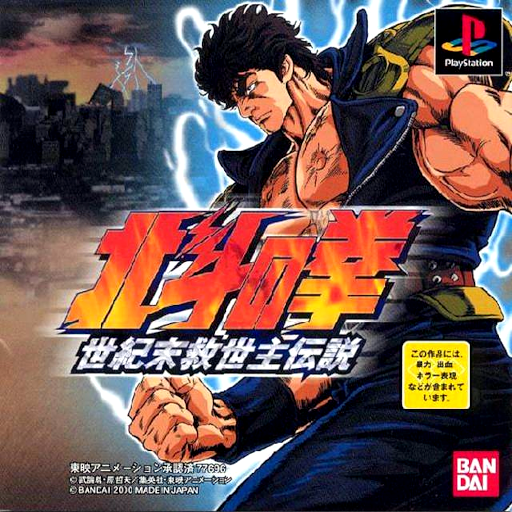
Hokuto no Ken - Seikimatsu Kyuuseishu Densetsu
Hokuto no Ken - Seikimatsu Kyuuseishu Densetsu is a PlayStation fighting game released in 2000 developed by Natsume, Inc.. It centers on move inputs, offense-defense reads, and character matchups, with controls and information arranged around the directional pad, shoulder and face buttons, plus DualShock twin analog sticks and vibration where supported.
- AI score · out of 10
- 7.6 / 10
About this game
Hokuto no Ken - Seikimatsu Kyuuseishu Densetsu is a PlayStation fighting game centered on move inputs, offense-defense reads, and character matchups. Short bouts use character differences and rising difficulty for variety, with progress divided into stages, tasks, matches, or growth milestones that make immediate goals understandable. Its value depends on whether these rules continue to create judgment and room for mastery rather than on length, sales, or series recognition. Short campaigns are judged by repeat-challenge value, while longer ones are judged by variety, pacing, and recovery after failure. Animation, hit feedback, and readable arenas create match tension, while early 3D graphics, pre-rendered backgrounds, CD audio, and full-motion video need to preserve targets and interface readability on a television. The genre-specific limitation is that button mapping, move recognition, multiplayer accessories, and cpu behavior can affect balance. Platform conditions also include disc loading, Memory Card saves, regional video standards, digital or analog control support, vibration, and dedicated peripherals affect original-hardware use. This description covers only this platform release and does not import features or conveniences from remasters, emulators, or other console editions.
Recommended games
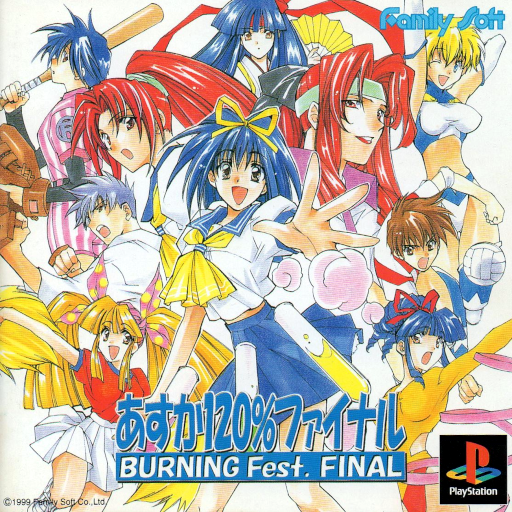
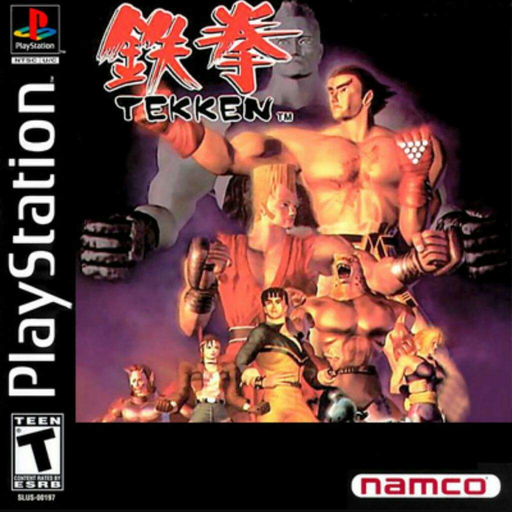
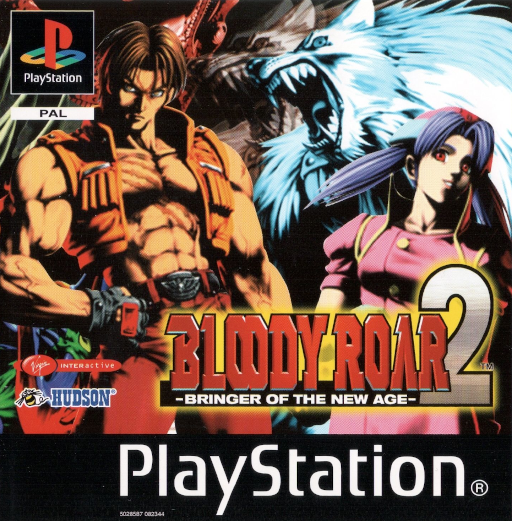
Related game recommendations on this platform
PlayStation
AI review
AI reviews are subjective assessments, not player ratings. See each review for its evidence and limitations.Published date:
Accessible brawling understands the source's appeal, with distinctive finishers and creative scene editing.
Simple punches, kicks and jumps make Kenshiro's crowd-clearing power immediately accessible, helped by a clear overview of the fighting space. Bosses demand a different skill: a timed directional finisher must succeed before the encounter ends. That ritual can be satisfying, but mistakes return players to repeated fighting. The campaign compresses the main story through Raoh and occasionally changes playable characters, retaining recognizable scenes while omitting material. Rough polygon models are not its strongest attraction; familiar Japanese animation voices and committed scene recreation provide the stronger identity. Unlockable Century's End Theater goes further, letting players rearrange scenes and dialogue into their own short productions. Fans and players seeking straightforward brawling should appreciate it, provided they do not expect an episode-by-episode recreation or competitive fighting depth.
Strengths
- Simple brawling and timed finishers give combat a distinctive rhythm.
- Familiar voices, character changes and scene/dialogue editing serve fans.
Weaknesses
- Failed boss finishers repeat the fight.
- Rough polygons and condensed episodes limit fidelity.
Who it is for: Hokuto fans who enjoy accessible brawling and creative dialogue editing.
Play notes: This is Bandai's original Japanese PS1 action game. Boss encounters require successful finishers; the story is condensed, not an entire animated-series reproduction.
View scoring basis
| Dimension | Review state | Score | Weight |
|---|---|---|---|
| Dimension A condensed arc changes characters and unlocks editable scenes/dialogue for distinctive post-game play. | Reviewed | 7.8 / 10 | Not provided |
| Dimension Accessible crowd combat and timed finishers have character, but failed endings repeat boss fighting. | Reviewed | 7.5 / 10 | Not provided |
| Dimension Familiar Japanese voices and recreated scenes appeal strongly, though rough polygons limit visual polish. | Reviewed | 7.0 / 10 | Not provided |
| Dimension D-pad movement, jump/punch/kick and a clear arena overview make basic actions accessible. | Reviewed | 8.0 / 10 | Not provided |
Review sources
Not provided
Core information
- Developer
- Natsume
- Publisher
- Bandai
- Release date
- 2000
- Platforms
- PlayStation
- Content kind
- Game
- Release state
- Released
- Region
- Worldwide
- Official website
- Not provided
- Offline minimum players
- Not provided
- Offline maximum players
- Not provided
- Online minimum players
- Not provided
- Online maximum players
- Not provided
- Categories
- Fighting · Primary genre
- Tags
- Short SessionsSolo-friendlyCombosMelee Combat3D GraphicsReplayableFast-pacedMain Story Under 10 HoursPlayer versus PlayerReal-time CombatAnime Style
- Supported game languages
- Not provided
- Requires base game
- Not provided
- Standalone
- Not provided
- Age ratings
- Not provided
- Play modes
- Single player
- Perspectives
- Not provided
Release editions
- PlayStationWorldwide2000
Game gallery
Sources
Not provided