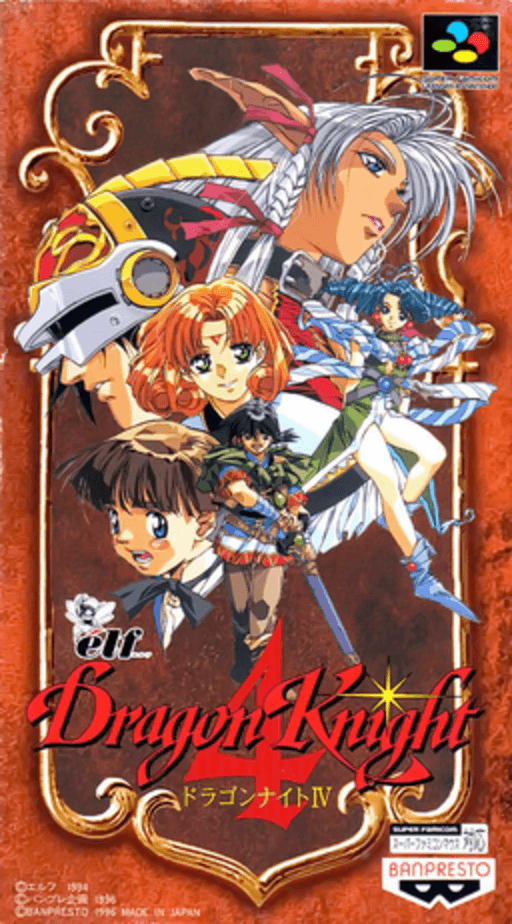
Dragon Knight 4
Dragon Knight 4 is a Super Famicom role-playing game released in 1996 developed by Elf Corporation. It centers on combat encounters, area and route exploration, and character or equipment growth, with controls, information, and pacing arranged around television output, a directional pad, shoulder buttons, and a six-button controller.
- AI score · out of 10
- 6.4 / 10
About this game
Dragon Knight 4 is a Super Famicom role-playing release centered on combat encounters, area and route exploration, and character or equipment growth. Story beats, exploration, and progression resources support a longer campaign, with progress divided into stages, tasks, matches, or growth milestones that make its immediate goals understandable. Its value depends on whether these rules continue to create judgment and room for mastery rather than on campaign length or series recognition. Short campaigns are judged by repeat-challenge value, while longer ones are judged by variety, pacing, and recovery after failure. Characters, world building, maps, and music carry most of the atmosphere, while sprite animation, scrolling, color, and chip-based audio jointly carry readability and atmosphere. The main genre-specific friction is that dense text, menu layers, repeated battles, and language dependence can slow progress. In addition, password or battery saves, multiplayer accessories, manual dependence, regional language, and cartridge enhancement chips can affect original-hardware use. This description covers only this release and excludes emulator features, modern-port conveniences, and content from other platforms.
Recommended games
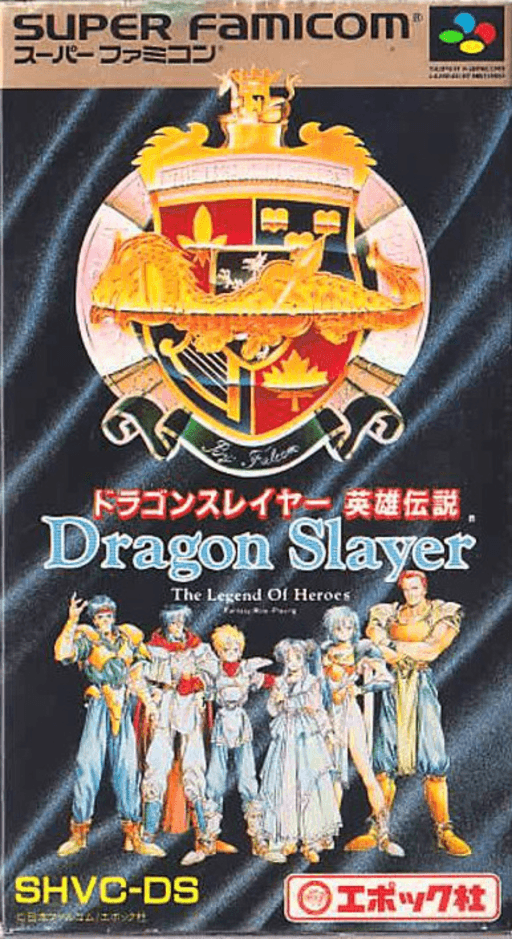
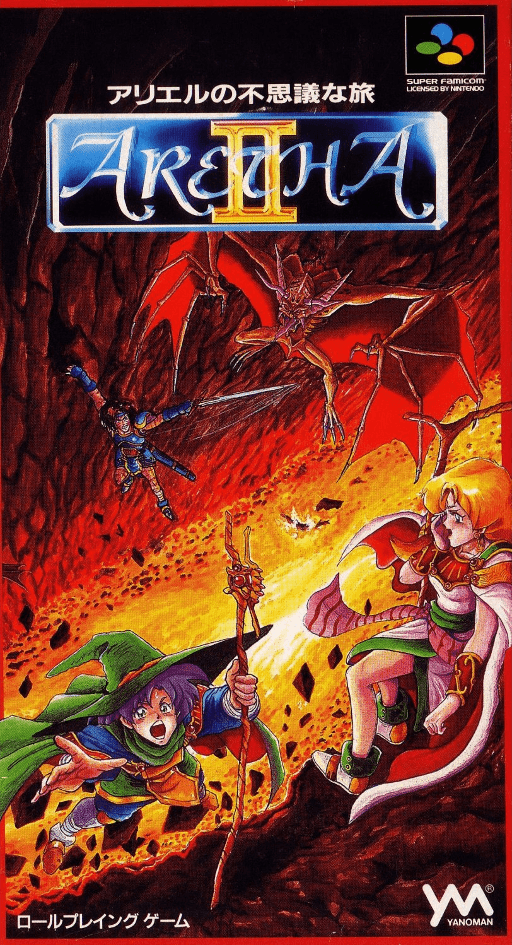
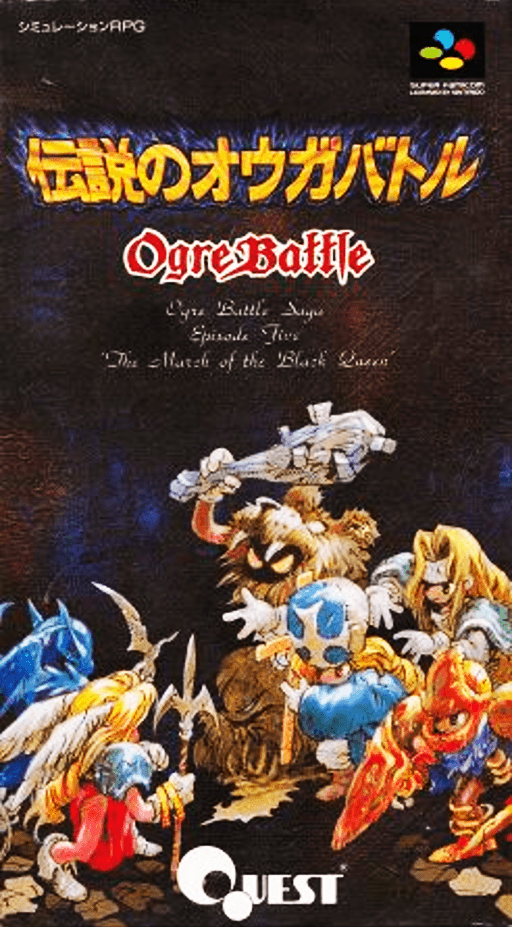
Related game recommendations on this platform
Super Famicom / SNES
AI review
AI reviews are subjective assessments, not player ratings. See each review for its evidence and limitations.Published date:
A worthwhile two-perspective story held back by uneven tactics and a drawn-out ending.
Dragon Knight 4 becomes most compelling when a change of protagonist gives familiar events a different meaning. Music supports the emotional reversal, while troop counts, baiting roles, ranged attacks and obstacle handling provide real tactical preparation. Unfortunately, range is disproportionately valuable, leaving many melee characters with less purpose. Fountain recovery and scarce revival resources also make managing losses time-consuming. Revisiting the story is meaningful, but repeated progression remains part of the experience, and some character illustrations and event music are inconsistent. The clearest usability problem arrives after the fighting: the SFC ending has lengthy, unskippable dialogue with slow text advancement, weakening the satisfaction of completion. It is best for Japanese-reading players who value the two-perspective narrative and tolerate uneven tactics. Expectations should be based on this console edition, not the adult PC originals.
Strengths
- The perspective reversal gives familiar events new meaning.
- Troop counts, baiting and ranged support reward tactical preparation.
Weaknesses
- Ranged dominance, recovery routines and an unskippable slow ending draw out the experience.
Who it is for: For Japanese-reading tactical players who value a two-perspective story despite uneven units.
Play notes: This covers the SFC edition, not adult PC content. Lengthy ending dialogue cannot be skipped.
View scoring basis
| Dimension | Review state | Score | Weight |
|---|---|---|---|
| Dimension A second perspective gives revisited events new meaning, while recovery and loss management slow repeated progress. | Reviewed | 6.3 / 10 | Not provided |
| Dimension Unit roles and positioning offer worthwhile planning, but ranged dominance narrows the need to use the full roster evenly. | Reviewed | 6.6 / 10 | Not provided |
| Dimension The perspective reversal and music create emotional investment, although some event music is uncomfortable to hear. | Reviewed | 6.7 / 10 | Not provided |
| Dimension The long ending lacks useful text-advance control, noticeably delaying the conclusion after the campaign is finished. | Reviewed | 5.3 / 10 | Not provided |
Review sources
Not provided
Core information
- Developer
- Elf
- Publisher
- Banpresto
- Release date
- 1996
- Platforms
- Super Famicom / SNES
- Content kind
- Game
- Release state
- Released
- Region
- Worldwide
- Official website
- Not provided
- Offline minimum players
- Not provided
- Offline maximum players
- Not provided
- Online minimum players
- Not provided
- Online maximum players
- Not provided
- Categories
- Role-Playing · Primary genre
- Tags
- ExplorationCommand-based CombatSolo-friendly2D GraphicsLevel ProgressionMain Story 20–50 HoursReal-time CombatFantasyStory-drivenTop-downLong-term ProgressionTurn-based Combat
- Supported game languages
- Not provided
- Requires base game
- Not provided
- Standalone
- Not provided
- Age ratings
- Not provided
- Play modes
- Not provided
- Perspectives
- Not provided
Release editions
- Super Famicom / SNESWorldwide1996
Game gallery
Sources
Not provided