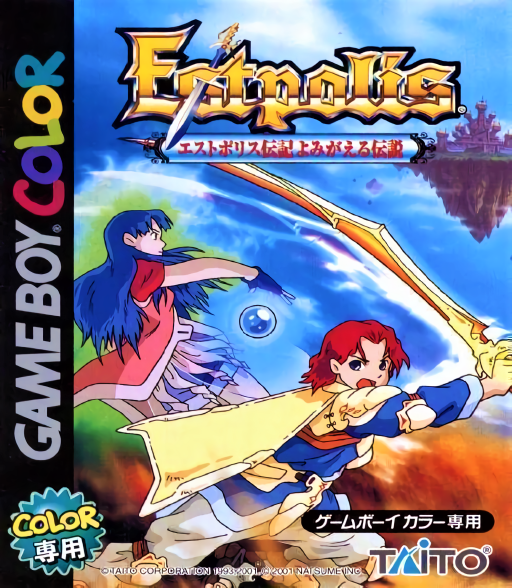
Estpolis Denki - Yomigaeru Densetsu
Estpolis Denki - Yomigaeru Densetsu is a Game Boy Color role-playing game released in 2001 developed by Neverland Co., Ltd.. It centers on character or equipment growth, area exploration, and combat and party setup, with controls, information, and pacing arranged around a color handheld screen, a directional pad, and two main action buttons.
- AI score · out of 10
- 6.8 / 10
About this game
Estpolis Denki - Yomigaeru Densetsu is a Game Boy Color role-playing release centered on character or equipment growth, area exploration, and combat and party setup. Story beats, exploration, and progression resources support a longer campaign, with progress divided into stages, tasks, matches, or growth milestones that make its immediate goals understandable. Its value depends on whether these rules continue to create judgment and room for mastery rather than on campaign length or series recognition. Short campaigns are judged by repeat-challenge value, while longer ones are judged by variety, pacing, and recovery after failure. Characters, world building, maps, and music carry most of the atmosphere, while color choices need to distinguish characters, objects, and routes rather than serve as decoration alone. The main genre-specific friction is that dense text, menu layers, repeated battles, and language dependence can slow progress. In addition, battery saves, link cables, cartridge-specific hardware, the unlit display, and regional language can affect the original experience. This description covers only this release and excludes emulator features, modern-port conveniences, and content from other platforms.
Collected in series
Lufia is a fantasy RPG series about travelling companions, inherited conflicts and the threat of the Sinistrals. Party battles and exploration anchor its adventures, with dungeon puzzles giving players something to unravel between encounters.
Recommended games
Related game recommendations on this platform
Game Boy Color (GBC)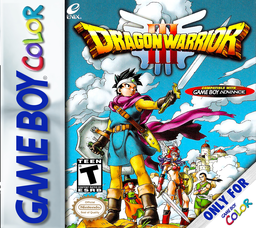
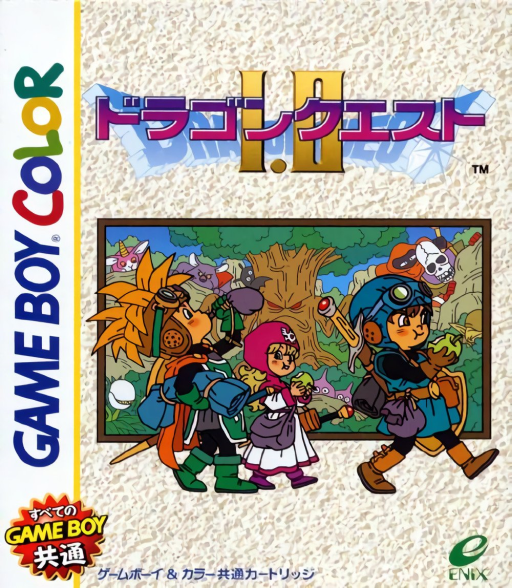
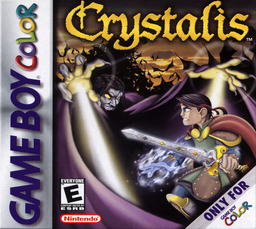

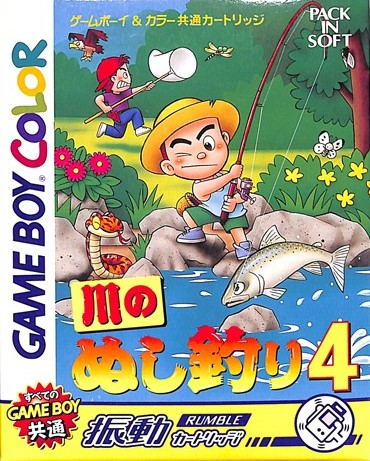
AI review
AI reviews are subjective assessments, not player ratings. See each review for its evidence and limitations.Published date:
Formation depth is stronger than the repetitive adventure around it.
The Legend Returns makes its large party matter through formation bonuses, colored resources and limited active attackers. Gradually adding companions helps players learn a system that initially sounds unwieldy, and demanding encounters reward that understanding. Exploration is less successful: many procedural floors repeat similar layouts instead of offering varied puzzles, while numerous allies receive only brief narrative attention. The original soundtrack gives the adventure a recognizable identity during otherwise repetitive exploration. Running, maps and a disposable Field Log support portable play, although layered directional commands and permanent-save restrictions take practice. It is best for RPG players interested in formation planning rather than those primarily seeking inventive dungeons or a deep ensemble story. Learning the directional commands and permanent-save conditions before difficult battles makes the available interruption tools easier to use safely.
Strengths
- Formation and colored resources create tactical choices
- Maps, running and a temporary save aid portable play
Weaknesses
- Repeated dungeon floors and brief characterization weaken progression
- Layered commands need practice; the Field Log is disposable
Who it is for: Patient RPG players interested in formation and resource planning.
Play notes: Original GBC release; loading consumes the Field Log, so distinguish temporary interruption from permanent saving.
View scoring basis
| Dimension | Review state | Score | Weight |
|---|---|---|---|
| Dimension Combat depth does not fully compensate for repetitive exploration and episodic characterization. | Reviewed | 5.5 / 10 | Not provided |
| Dimension Formation planning offers meaningful depth that becomes clearer as the party grows. | Reviewed | 7.7 / 10 | Not provided |
| Dimension Appealing melodies give the adventure a distinct identity beyond its repetitive exploration. | Reviewed | 6.7 / 10 | Not provided |
| Dimension Useful navigation and interruption coexist with layered commands and restricted permanent saving. | Reviewed | 6.5 / 10 | Not provided |
Review sources
Not provided
Core information
- Developer
- Neverland
- Publisher
- Natsume
- Release date
- 2001
- Platforms
- Game Boy Color (GBC)
- Content kind
- Game
- Release state
- Released
- Region
- Worldwide
- Official website
- Not provided
- Offline minimum players
- Not provided
- Offline maximum players
- Not provided
- Online minimum players
- Not provided
- Online maximum players
- Not provided
- Categories
- Role-Playing · Primary genre
- Tags
- Exploration2D GraphicsStory-drivenTop-downFantasyMain Story 20–50 HoursLong-term ProgressionTurn-based CombatLevel ProgressionSolo-friendly
- Supported game languages
- Not provided
- Requires base game
- Not provided
- Standalone
- Not provided
- Age ratings
- Not provided
- Play modes
- Not provided
- Perspectives
- Not provided
Release editions
- Game Boy Color (GBC)Worldwide2001
Game gallery
Sources
Not provided