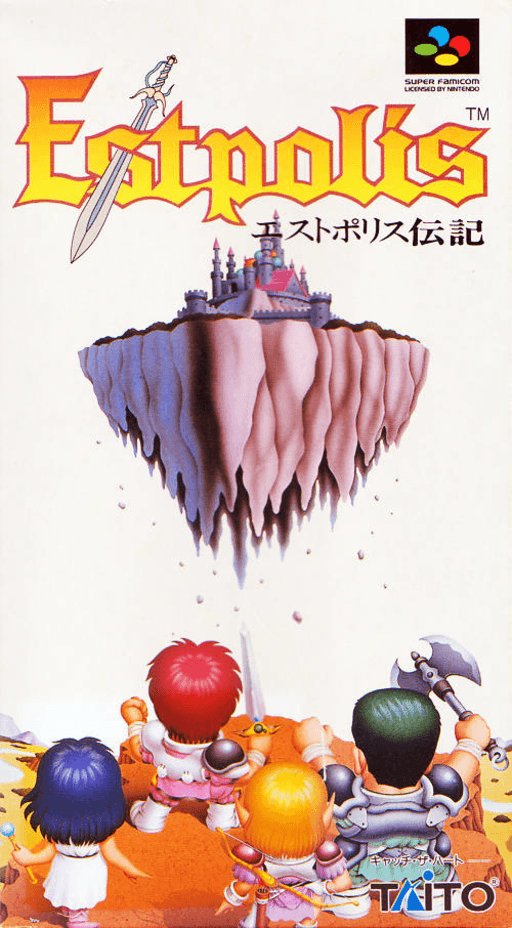
Estpolis Denki
Estpolis Denki is a Super Famicom role-playing game released in 1993 developed by Taito. It centers on character or equipment growth, area exploration, and combat and party setup, with controls, information, and pacing arranged around television output, a directional pad, shoulder buttons, and a six-button controller.
- AI score · out of 10
- 6.9 / 10
About this game
Estpolis Denki is a Super Famicom role-playing release centered on character or equipment growth, area exploration, and combat and party setup. Story beats, exploration, and progression resources support a longer campaign, with progress divided into stages, tasks, matches, or growth milestones that make its immediate goals understandable. Its value depends on whether these rules continue to create judgment and room for mastery rather than on campaign length or series recognition. Short campaigns are judged by repeat-challenge value, while longer ones are judged by variety, pacing, and recovery after failure. Characters, world building, maps, and music carry most of the atmosphere, while sprite animation, scrolling, color, and chip-based audio jointly carry readability and atmosphere. The main genre-specific friction is that dense text, menu layers, repeated battles, and language dependence can slow progress. In addition, password or battery saves, multiplayer accessories, manual dependence, regional language, and cartridge enhancement chips can affect original-hardware use. This description covers only this release and excludes emulator features, modern-port conveniences, and content from other platforms.
Collected in series
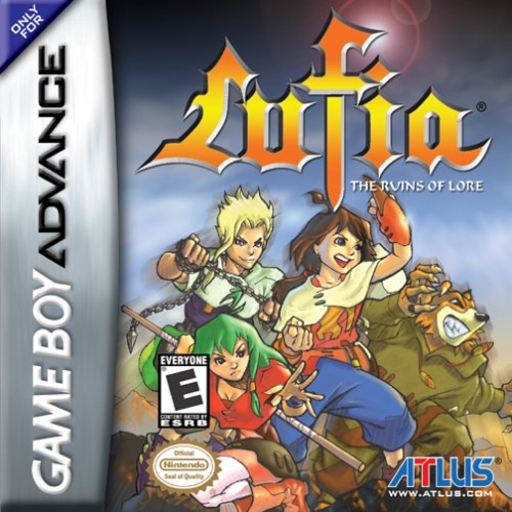
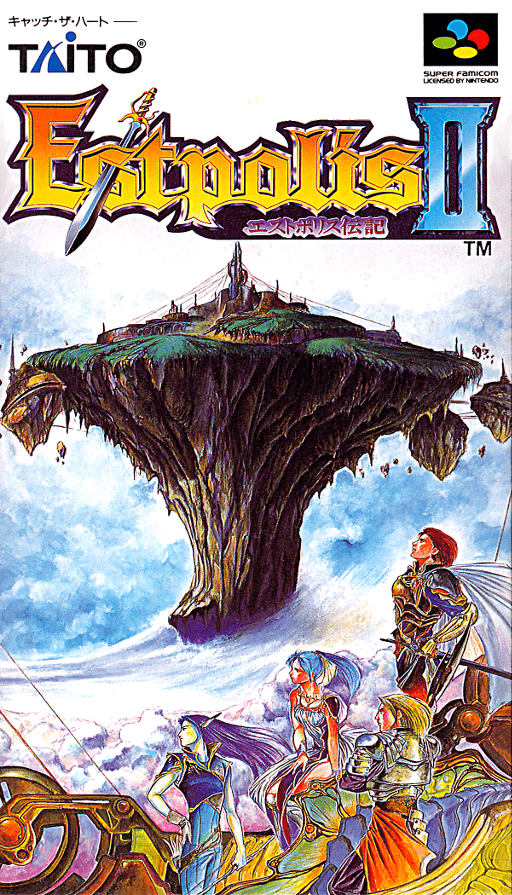
Lufia is a fantasy RPG series about travelling companions, inherited conflicts and the threat of the Sinistrals. Party battles and exploration anchor its adventures, with dungeon puzzles giving players something to unravel between encounters.
Recommended games
Related game recommendations on this platform
Super Famicom / SNES


AI review
AI reviews are subjective assessments, not player ratings. See each review for its evidence and limitations.Published date:
Party interaction gives a traditional adventure momentum, despite repetitive exploration.
Estpolis Denki pairs straightforward turn-based combat with a party worth following. Attacks do not automatically switch after their target dies, so assigning actions across enemy groups requires attention rather than repeated confirmation. Occasional puzzles and tougher bosses also restore focus. The strongest motivation is Lufia's mystery and the party's lighthearted banter, not an expanding collection of systems. Unfortunately, caves, towers and towns often resemble one another, while an occasional poorly signposted errand sends players back to an earlier location. Slow outdoor and dungeon movement adds friction, though the journey retains momentum. Overworld, boss and fortress music contributes atmosphere more effectively than the repetitive scenery or ordinary battle theme. It suits players who value characters and familiar command-based combat over constantly surprising environments.
Strengths
- Party actions require deliberate allocation
- Engaging character mystery and interaction
- Strong themes for key locations
Weaknesses
- Repeated cave and tower scenery
- Some poorly signposted errands
- Slow outdoor and dungeon movement
Who it is for: RPG players who value party relationships and familiar turn-based commands.
Play notes: Regional text quality is not assumed identical; some objectives require revisiting old locations.
View scoring basis
| Dimension | Review state | Score | Weight |
|---|---|---|---|
| Dimension Party interaction and the central mystery sustain progression, while repeated locales and unclear errands interrupt exploration. | Reviewed | 6.5 / 10 | Not provided |
| Dimension Basic turn-based commands and non-retargeting attacks reward deliberate action allocation. | Reviewed | 7.2 / 10 | Not provided |
| Dimension Key themes and fortress detail support atmosphere, but common locations lack visual distinction. | Reviewed | 6.8 / 10 | Not provided |
| Dimension Menu combat is straightforward; slow outdoor and dungeon movement adds a modest traversal cost. | Reviewed | 6.9 / 10 | Not provided |
Review sources
Not provided
Core information
- Developer
- Taito
- Publisher
- Taito
- Release date
- 1993
- Platforms
- Super Famicom / SNES
- Content kind
- Game
- Release state
- Released
- Region
- Worldwide
- Official website
- Not provided
- Offline minimum players
- Not provided
- Offline maximum players
- Not provided
- Online minimum players
- Not provided
- Online maximum players
- Not provided
- Categories
- Role-Playing · Primary genre
- Tags
- Solo-friendlyTop-downFantasyLong-term ProgressionMain Story 20–50 HoursTurn-based CombatExplorationStory-driven2D GraphicsLevel Progression
- Supported game languages
- Not provided
- Requires base game
- Not provided
- Standalone
- Not provided
- Age ratings
- Not provided
- Play modes
- Not provided
- Perspectives
- Not provided
Release editions
- Super Famicom / SNESWorldwide1993
Game gallery
Sources
Not provided