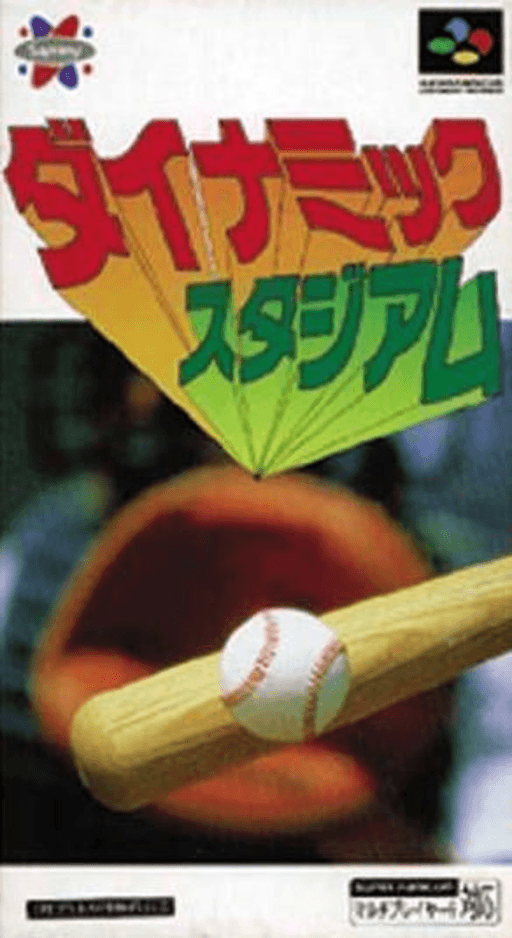
Dynamic Stadium
Dynamic Stadium is a Super Famicom sports game released in 1993 developed by Electronics Application. It centers on competitive sport play, sport controls, and shifts between attack and defense, with controls, information, and pacing arranged around television output, a directional pad, shoulder buttons, and a six-button controller.
- AI score · out of 10
- 6.7 / 10
About this game
Dynamic Stadium is a Super Famicom sports release centered on competitive sport play, sport controls, and shifts between attack and defense. Matches, challenges, and tournament goals give sessions clear boundaries, with progress divided into stages, tasks, matches, or growth milestones that make its immediate goals understandable. Its value depends on whether these rules continue to create judgment and room for mastery rather than on campaign length or series recognition. Short campaigns are judged by repeat-challenge value, while longer ones are judged by variety, pacing, and recovery after failure. Players, venues, and score feedback establish the match atmosphere, while sprite animation, scrolling, color, and chip-based audio jointly carry readability and atmosphere. The main genre-specific friction is that opponent ai, control precision, and period-specific rosters can affect consistency. In addition, password or battery saves, multiplayer accessories, manual dependence, regional language, and cartridge enhancement chips can affect original-hardware use. This description covers only this release and excludes emulator features, modern-port conveniences, and content from other platforms.
Recommended games
Related game recommendations on this platform
Super Famicom / SNES

AI review
AI reviews are subjective assessments, not player ratings. See each review for its evidence and limitations.Published date:
Demanding batting offset by usable fielding and a lively baseball identity.
Dynamic Stadium gives Japanese league baseball a boisterous identity through muscular players, lively umpire calls, energetic music and postgame sports news. Pitch variation and positioning for catches and throws keep defense active, while automatic running to first base simplifies the basic batting sequence. Batting itself is less welcoming: the pitcher looks close, making incoming pitches difficult to read before committing to a swing. Winning the tournament with the Giants reveals a demanding extra team, and shorter leagues allow flexible play, although earning the season credits requires the full 130-game setting. Innings and mercy-rule options help shorten individual matches across the modes. The result is a functional, characterful baseball game for players willing to practice pitch recognition, rather than an immediately comfortable introduction to hitting.
Strengths
- Pitch variation and positioning for catches and throws keep defense active.
- Umpire calls, energetic music and postgame news give matches a distinctive personality.
- Innings and mercy-rule settings provide practical control over individual match length.
Weaknesses
- The close-looking pitcher makes pitch recognition and swing timing demanding.
- Season credits require victory with the 130-game setting; short leagues lack that conclusion.
Who it is for: Baseball players who enjoy Japanese league settings and bold presentation, and are willing to practice pitch recognition and adjust match length.
Play notes: This covers the original 1993 Japanese SFC edition. Short leagues are playable, but season credits require victory in the 130-game setting; the tournament offers another completion route. Adjust innings and the mercy rule to manage match length.
View scoring basis
| Dimension | Review state | Score | Weight |
|---|---|---|---|
| Dimension The tournament and extra team create meaningful goals, while the full-season credits condition is considerably more demanding than a short league. | Reviewed | 6.6 / 10 | Not provided |
| Dimension Pitch variation and fielding positions provide active defensive choices, while batting rewards positioning and pitch recognition. The close view makes anticipation demanding, leaving a functional contest with a substantial attacking learning hurdle. | Reviewed | 6.4 / 10 | Not provided |
| Dimension Bold players, lively calls, music and postgame news establish a distinctive, readable baseball identity. The broader production receives more restrained praise; character and clear information are more persuasive than elaborate polish. | Reviewed | 7.0 / 10 | Not provided |
| Dimension Innings and mercy-rule settings work across the modes, providing useful control over match length and the effort required for each game. | Reviewed | 7.4 / 10 | Not provided |
Review sources
Not provided
Core information
- Developer
- Electronics Application
- Publisher
- Sammy
- Release date
- 1993
- Platforms
- Super Famicom / SNES
- Content kind
- Game
- Release state
- Released
- Region
- Worldwide
- Official website
- Not provided
- Offline minimum players
- Not provided
- Offline maximum players
- Not provided
- Online minimum players
- Not provided
- Online maximum players
- Not provided
- Categories
- Sports · Primary genre
- Tags
- Sports-based PlayPlayer versus PlayerReplayableSolo-friendlyFast-pacedPick-up and PlayShort SessionsMain Story Under 10 Hours2D GraphicsLow Entry Barrier
- Supported game languages
- Not provided
- Requires base game
- Not provided
- Standalone
- Not provided
- Age ratings
- Not provided
- Play modes
- Not provided
- Perspectives
- Not provided
Release editions
- Super Famicom / SNESWorldwide1993
Game gallery
Sources
Not provided