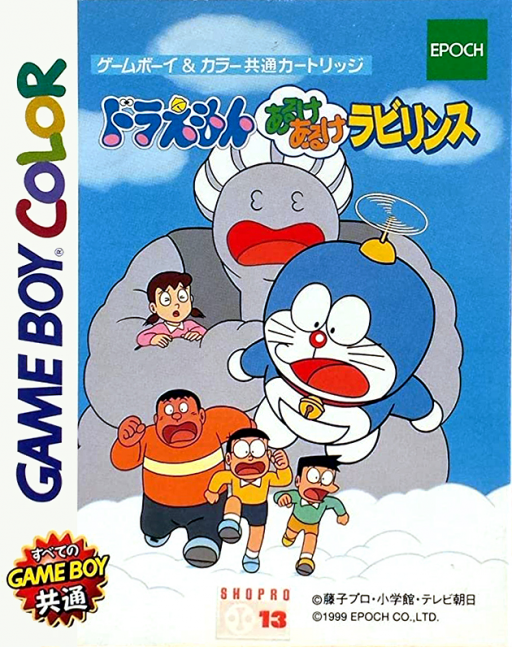
Doraemon - Aruke Aruke Labyrinth
Doraemon - Aruke Aruke Labyrinth is a Game Boy Color action game released in 1999 developed by Epoch. It centers on movement and immediate actions, enemy and hazard responses, and stage objectives, with controls, information, and pacing arranged around a color handheld screen, a directional pad, and two main action buttons.
- AI score · out of 10
- 6.6 / 10
About this game
Doraemon - Aruke Aruke Labyrinth is a Game Boy Color action release centered on movement and immediate actions, enemy and hazard responses, and stage objectives. Stages build pressure through routes, enemy patterns, and changing objectives, with progress divided into stages, tasks, matches, or growth milestones that make its immediate goals understandable. Its value depends on whether these rules continue to create judgment and room for mastery rather than on campaign length or series recognition. Short campaigns are judged by repeat-challenge value, while longer ones are judged by variety, pacing, and recovery after failure. Readable animation, hits, and hazards determine whether feedback remains dependable, while color choices need to distinguish characters, objects, and routes rather than serve as decoration alone. The main genre-specific friction is that period-specific collision rules, limited guidance, and repeated ground after failure can raise the entry barrier. In addition, battery saves, link cables, cartridge-specific hardware, the unlit display, and regional language can affect the original experience. This description covers only this release and excludes emulator features, modern-port conveniences, and content from other platforms.
Collected in series
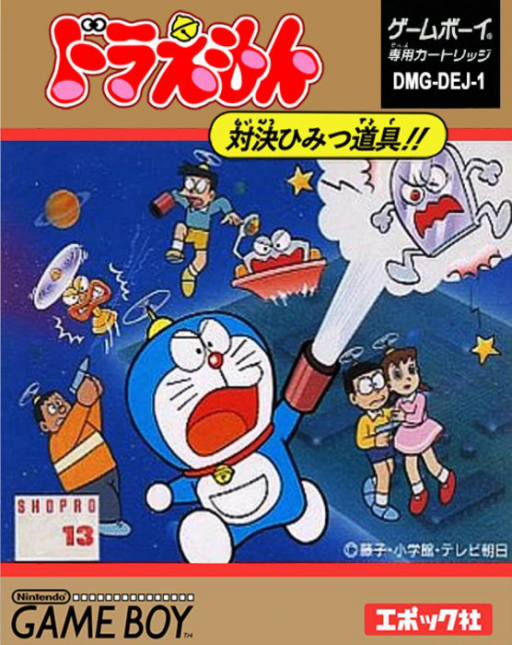
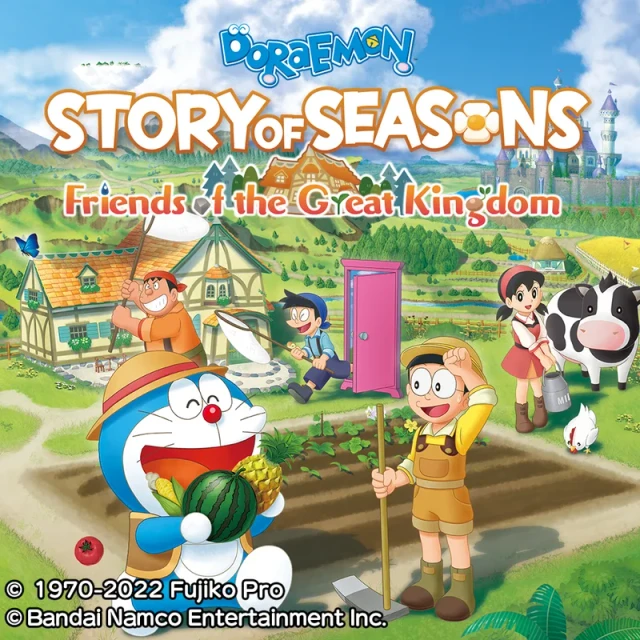
Doraemon games take Noby and his friends beyond everyday life with secret gadgets and new places to explore. Their adventures range from action based on the films to Story of Seasons crossovers, where crops, animals and friendships set a gentler rhythm.
Recommended games
Related game recommendations on this platform
Game Boy Color (GBC)

AI review
AI reviews are subjective assessments, not player ratings. See each review for its evidence and limitations.Published date:
Cursor-guided escort puzzles appeal, but regional restarts are unforgiving late on.
Aruke Aruke Labyrinth asks you to protect a constantly walking character rather than directly control his jumps. A cursor removes obstacles, attacks enemies and helps change the route, combining advance planning with timely intervention. Moving-target boss fights interrupt the escort puzzles, and descriptions beneath selected obstacles make their functions easier to understand. Suneo's speed helps earn timed extra lives, although enemy speed changes with the chosen character too; he nevertheless tends to overshadow the other choices. A rescue involving a damaged smoke robot and Shizuka's exaggerated expressions adds light humor. Continuing is the demanding part: saving between areas does not prevent restarting the area's stages after losing your lives, with only two lives restored. It rewards patient route planners, not players expecting the familiar cast to guarantee an easy adventure.
Strengths
- Escort puzzles combine planning and timely intervention.
- Cursor-based bosses vary the pace.
- Obstacle descriptions explain their functions.
Weaknesses
- Extra-life incentives favor the fast character, and two-life regional restarts create substantial late-game repetition.
Who it is for: For escort-puzzle fans willing to plan carefully and repeat routes.
Play notes: This is the 1999 Japanese handheld original, not the Tin Labyrinth film adaptation; familiar characters do not imply low difficulty, and continuation resets lives.
View scoring basis
| Dimension | Review state | Score | Weight |
|---|---|---|---|
| Dimension Cursor-based boss fights vary the puzzle stages, while repeated regional progress increases the late-game burden. | Reviewed | 6.8 / 10 | Not provided |
| Dimension Guiding walkers blends puzzle planning with reactions, but speed-based extra lives often favor Suneo over the other characters. | Reviewed | 7.1 / 10 | Not provided |
| Dimension Familiar characters and exaggerated expressions give the escort premise light humor, while bottom-screen explanations keep obstacle meanings clear. | Reviewed | 6.4 / 10 | Not provided |
| Dimension Obstacle descriptions aid understanding, but saving does not remove repeated regional stages and the two-life restart is demanding. | Reviewed | 5.1 / 10 | Not provided |
Review sources
Not provided
Core information
- Developer
- Epoch
- Publisher
- Epoch
- Release date
- 1999
- Platforms
- Game Boy Color (GBC)
- Content kind
- Game
- Release state
- Released
- Region
- Worldwide
- Official website
- Not provided
- Offline minimum players
- Not provided
- Offline maximum players
- Not provided
- Online minimum players
- Not provided
- Online maximum players
- Not provided
- Categories
- Action · Primary genre
- Tags
- Fast-pacedPlatformingMain Story Under 10 HoursSolo-friendlySide-scrollingDodgeReal-time CombatLinear LevelsReplayable2D Graphics
- Supported game languages
- Not provided
- Requires base game
- Not provided
- Standalone
- Not provided
- Age ratings
- Not provided
- Play modes
- Single player
- Perspectives
- Side view
Release editions
- Game Boy Color (GBC)Worldwide1999
Game gallery
Sources
Not provided