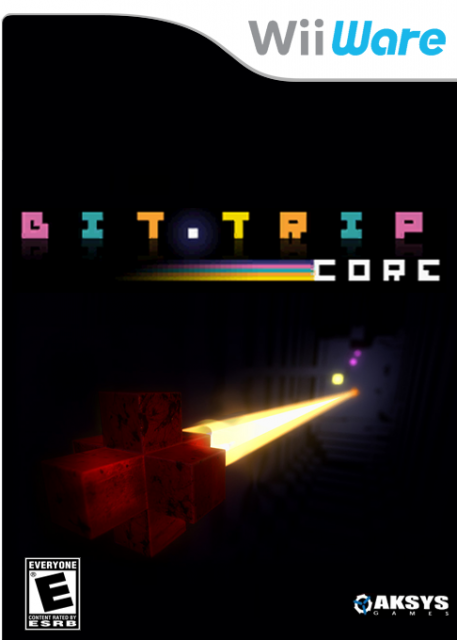
Bit. Trip Core
Bit. Trip Core is a Wii shooter game released in 2009 developed by Choice Provisions. It centers on aiming and shooting, positioning and evasion, and weapon and firepower management, with controls, information, and pacing arranged around Wii Remote pointing and motion input, the Nunchuk, and Classic or GameCube controllers where supported.
- AI score · out of 10
- 7.9 / 10
About this game
Bit. Trip Core is a Wii shooter game centered on aiming and shooting, positioning and evasion, and weapon and firepower management. Missions pace progress through enemy waves, routes, objectives, and weapon opportunities, with progress divided into stages, tasks, matches, or growth milestones that make its immediate goals understandable. Its value depends on whether these rules continue to create judgment and room for mastery rather than on length, sales, or series recognition. Short campaigns are judged by repeat-challenge value, while longer ones are judged by variety, pacing, and recovery after failure. Aiming feedback, projectiles, hits, and danger zones need to remain readable, while standard-definition output, motion feedback, and interface scale at television distance need to preserve control readability. The genre-specific limitation is that camera turning, aiming methods, dense encounters, and multiplayer service conditions can increase control pressure. Platform conditions also include the Sensor Bar, remote batteries, motion calibration, peripheral requirements, storage limits, and retired online services affect present-day use. This description covers only this platform release and does not import features from other editions.
Collected in series
Bit.Trip ties electronic music to precise arcade actions, from bouncing incoming beats to guiding CommanderVideo through rhythmic obstacle courses. Its retro visuals and musical feedback make each successful move feel like part of the track, while the Runner branch builds that idea into platforming adventures.

Recommended games
Related game recommendations on this platform
Wii



AI review
AI reviews are subjective assessments, not player ratings. See each review for its evidence and limitations.Published date:
Four-direction beams make rhythm timing a focused challenge, with music and graphics reinforcing each other and demanding patterns rewarding patient practice.
Four-direction beams make rhythm timing a focused challenge, with music and graphics reinforcing each other and demanding patterns rewarding patient practice. Direction inputs and timed beams meet beats at a fixed crossing point. Separate direction and timing inputs turn simple rules into demanding decisions, with a limited bomb providing recovery without obscuring the mastery goals. Increasing density develops the same rules and cooperation shares attention, creating purposeful replay despite a concentrated structure and demanding initial learning. Synchronized visual change and sound make abstraction serve rhythm, although energetic backgrounds sometimes add reading pressure to an otherwise coherent audiovisual system. Few buttons and clear directional feedback ease initial learning, while rotated mappings require deliberate adaptation rather than implying undocumented technical failures. Rhythm players who enjoy practicing concentrated patterns, dividing attention across directions and improving repeat runs rather than collecting extensive stages.
Strengths
- Direction inputs and timed beams meet beats at a fixed crossing point.
- Synchronized visual change and sound make abstraction serve rhythm, although energetic backgrounds sometimes add reading pressure to an otherwise coherent audiovisual system.
Weaknesses
- Simultaneous directions put considerable pressure on attention switching.
Who it is for: Rhythm players who enjoy practicing concentrated patterns, dividing attention across directions and improving repeat runs rather than collecting extensive stages.
Play notes: This covers an existing WiiWare copy; later directional changes and dense beats impose a substantial learning demand on beginners.
View scoring basis
| Dimension | Review state | Score | Weight |
|---|---|---|---|
| Dimension Increasing density develops the same rules and cooperation shares attention, creating purposeful replay despite a concentrated structure and demanding initial learning. | Reviewed | 7.4 / 10 | Not provided |
| Dimension Separate direction and timing inputs turn simple rules into demanding decisions, with a limited bomb providing recovery without obscuring the mastery goals. | Reviewed | 8.0 / 10 | Not provided |
| Dimension Synchronized visual change and sound make abstraction serve rhythm, although energetic backgrounds sometimes add reading pressure to an otherwise coherent audiovisual system. | Reviewed | 8.4 / 10 | Not provided |
| Dimension Few buttons and clear directional feedback ease initial learning, while rotated mappings require deliberate adaptation rather than implying undocumented technical failures. | Reviewed | 7.8 / 10 | Not provided |
Review sources
Not provided
Core information
- Developer
- Choice Provisions
- Publisher
- Qubic Games
- Release date
- 2009
- Platforms
- Wii
- Content kind
- Game
- Release state
- Released
- Region
- Worldwide
- Official website
- Not provided
- Offline minimum players
- Not provided
- Offline maximum players
- Not provided
- Online minimum players
- Not provided
- Online maximum players
- Not provided
- Categories
- Music & Dance · Primary genre
- Tags
- ShootingPlayer versus EnvironmentReplayable3D GraphicsSolo-friendlyLinear LevelsMain Story Under 10 HoursFast-pacedDodgeThird Person
- Supported game languages
- Not provided
- Requires base game
- Not provided
- Standalone
- Not provided
- Age ratings
- Not provided
- Play modes
- Single player
- Perspectives
- Not provided
Release editions
- WiiWorldwide2009
Game gallery
Sources
Not provided