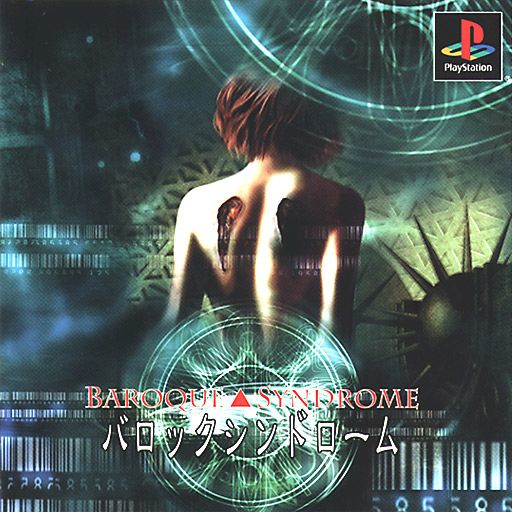
Baroque Syndrome
Baroque Syndrome is a PlayStation adventure game released in 2000 developed by Sting. It centers on location exploration, character and object interaction, and objective or clue progression, with controls and information arranged around the directional pad, shoulder and face buttons, plus DualShock twin analog sticks and vibration where supported.
- AI score · out of 10
- 6.6 / 10
About this game
Baroque Syndrome is a PlayStation adventure game centered on location exploration, character and object interaction, and objective or clue progression. Locations, objectives, and clues gradually open the main chapters, with progress divided into stages, tasks, matches, or growth milestones that make immediate goals understandable. Its value depends on whether these rules continue to create judgment and room for mastery rather than on length, sales, or series recognition. Short campaigns are judged by repeat-challenge value, while longer ones are judged by variety, pacing, and recovery after failure. Theme, character expression, and environmental clues need to support exploration together, while early 3D graphics, pre-rendered backgrounds, CD audio, and full-motion video need to preserve targets and interface readability on a television. The genre-specific limitation is that guidance, objective triggers, camera behavior, or dense text can create search and comprehension costs. Platform conditions also include disc loading, Memory Card saves, regional video standards, digital or analog control support, vibration, and dedicated peripherals affect original-hardware use. This description covers only this platform release and does not import features or conveniences from remasters, emulators, or other console editions.
Collected in series
Baroque explores a ruined world through strange encounters, unsettling imagery and secrets that emerge gradually. Its core dungeon adventure rewards another descent into the unknown, while story and shooting spin-offs approach the same world from different angles.
Recommended games
Related game recommendations on this platform
PlayStation
AI review
AI reviews are subjective assessments, not player ratings. See each review for its evidence and limitations.Published date:
A short, strange Baroque prequel whose atmosphere exceeds its narrative breadth.
The original PlayStation Baroque Syndrome is not the series' dungeon RPG. It is a psychological-horror visual novel set before the catastrophe, following a merchant who creates desired delusions for troubled clients while disturbing incidents spread across the city. Full-screen text over still imagery and occasional choices lead to different endings; readers seeking combat or free exploration should reset expectations. Its most persuasive feature is mood. A mix of photographic and illustrated imagery, music and unsettling hints of monstrous change gives the prequel a distinctive urban anxiety. Yet accounts of the preserved work consistently describe a short initial route. Branches and replay indicators add reasons to return, but cannot wholly fill out the mystery, and readers disagree about the strength of the writing. Saving anywhere, revisiting earlier text and advancing with a held button are welcome, if basic, reading tools; there is no automatic reading mode. Fans of the Baroque universe or compact eerie fiction will find a worthwhile curiosity. Those wanting a long, self-contained mystery may be left wanting more.
Strengths
- Distinctive pre-catastrophe setting and unsettling mixed-media atmosphere.
- Multiple endings, backlog and flexible saving encourage revisits.
Weaknesses
- Brief routes leave much of the world underdeveloped.
- Limited interaction, no auto-read and divisive prose.
Who it is for: Baroque fans and readers interested in concise psychological-horror visual novels.
Play notes: This is not the action dungeon crawler; PS3 display issues are not treated as original-disc behavior.
View scoring basis
| Dimension | Review state | Score | Weight |
|---|---|---|---|
| Dimension Multiple endings make replay worthwhile, yet the individual route is short and the setting can remain underexplained. | Reviewed | 6.2 / 10 | Not provided |
| Dimension The delusion-writing premise gives branching reading a distinct role, but interaction remains visual-novel choices rather than the parent game's dungeon action. | Reviewed | 6.4 / 10 | Not provided |
| Dimension Unsettling mixed-media imagery and sparse audio establish an unusual urban dread, though it is unvoiced and the prose divides readers. | Reviewed | 7.4 / 10 | Not provided |
| Dimension Anywhere saving, backlog and held-button text advance are useful, though automatic reading is absent; PS3-specific blur is not assigned to the original disc. | Reviewed | 7.0 / 10 | Not provided |
Review sources
Not provided
Core information
- Developer
- Sting
- Publisher
- Sting
- Release date
- 2000
- Platforms
- PlayStation
- Content kind
- Game
- Release state
- Released
- Region
- Worldwide
- Official website
- Not provided
- Offline minimum players
- Not provided
- Offline maximum players
- Not provided
- Online minimum players
- Not provided
- Online maximum players
- Not provided
- Categories
- Interactive Narrative · Primary genre
- Tags
- Solo-friendlyStory-drivenLinear LevelsPuzzle SolvingInvestigationSlow BurnExploration3D GraphicsThird PersonMain Story 10–20 Hours
- Supported game languages
- Not provided
- Requires base game
- Not provided
- Standalone
- Not provided
- Age ratings
- Not provided
- Play modes
- Single player
- Perspectives
- First person
Release editions
- PlayStationWorldwide2000
- PlayStation 3Worldwide2008
Game gallery
Sources
Not provided