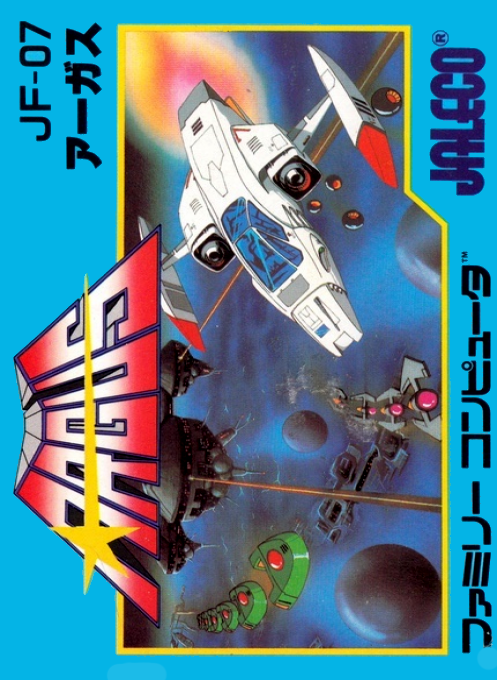
Argus
Argus is a vertical shooter by Jaleco and conversion of an arcade game originally released in 1986. The players takes control of a space-fighter equipped with a front laser gun and ground bombs. Although the game features power-ups, they follow an unusual and unique formula - tiles on the ground must be destroyed in order to upgrade the main weapon or trigger special events. However, three of these tiles must be destroyed to activate such power-ups - B creates a temporary barrier around the ship,P upgrades the primary weapon and L gives the player an extra bonus at the end of each stage. Another interesting twist to the game is the Uoru armor; a shadow sometimes appear on the ground and if the player aligns his own shadow with it, then the ship transforms into a powerful robot for a short amount of time. Each stage ends with the same boss battle; a large Mega Argus fortress with a slow flashing core at its center, and the only way to destroy this pernicious mothership is to bomb its core when it is fully exposed. After the boss is taken care of, the player must successfully land on a runway and be cautious not to crash the ship. Argus features nine levels and includes a two-player alternating option.
- AI score · out of 10
- 7.6 / 10
About this game
Argus is a vertical shooter by Jaleco and conversion of an arcade game originally released in 1986. The players takes control of a space-fighter equipped with a front laser gun and ground bombs. Although the game features power-ups, they follow an unusual and unique formula - tiles on the ground must be destroyed in order to upgrade the main weapon or trigger special events. However, three of these tiles must be destroyed to activate such power-ups - B creates a temporary barrier around the ship,P upgrades the primary weapon and L gives the player an extra bonus at the end of each stage. Another interesting twist to the game is the Uoru armor; a shadow sometimes appear on the ground and if the player aligns his own shadow with it, then the ship transforms into a powerful robot for a short amount of time. Each stage ends with the same boss battle; a large Mega Argus fortress with a slow flashing core at its center, and the only way to destroy this pernicious mothership is to bomb its core when it is fully exposed. After the boss is taken care of, the player must successfully land on a runway and be cautious not to crash the ship. Argus features nine levels and includes a two-player alternating option.
Recommended games
Related game recommendations on this platform
Famicom / NES
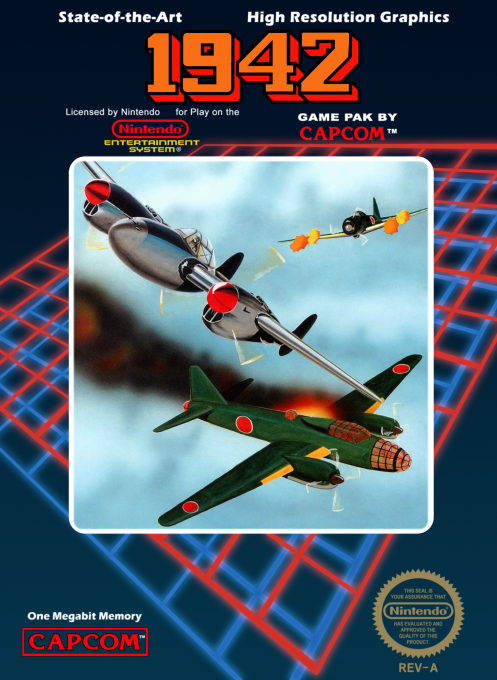
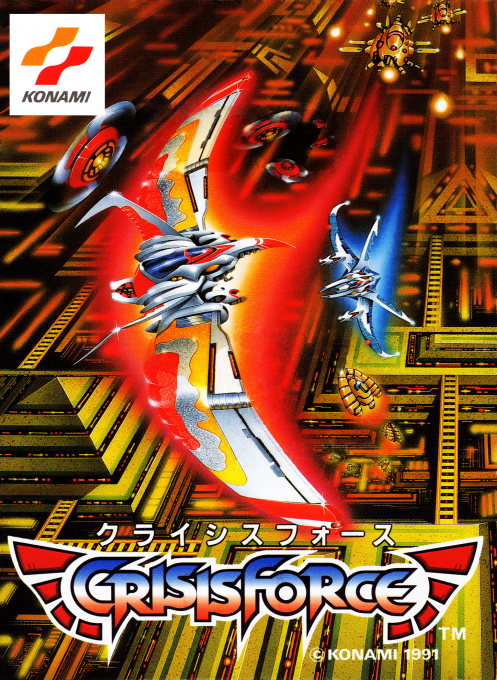
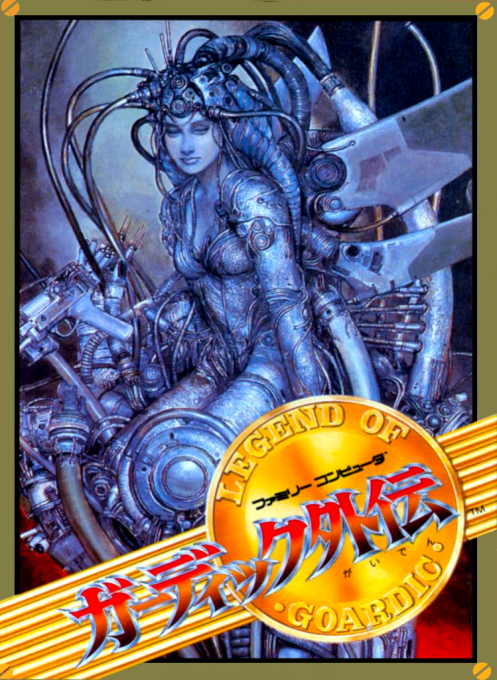
AI review
AI reviews are subjective assessments, not player ratings. See each review for its evidence and limitations.Published date:
Argus is assessed here as a specific FC/NES release with its documented strengths and practical limits kept in view.
Argus is a vertical shooter by Jaleco and conversion of an arcade game originally released in 1986. The players takes control of a space-fighter equipped with a front laser gun and ground bombs. Although the game features power-ups, they follow an unusual and unique formula - tiles on the ground must be destroyed in order to upgrade the main weapon or trigger special events. However, three of these tiles must be destroyed to activate such power-ups - B creates a temporary barrier around the ship,P upgrades the primary weapon and L gives the player an extra bonus at the end of each stage. Another interesting This assessment focuses on the specific FC or NES release and on the play actions, goals, and progression documented for Argus. Its value comes from how clearly the central rules create decisions and feedback across a session. Pacing is judged by the variety of situations, the learning curve, recovery after failure, and the reason to replay. Presentation is considered through readability, animation, sound, and the consistency of the game's style rather than by modern resolution. Practical limits such as period controls, guidance, saving, or required accessories are included only when they affect this release. Players who enjoy learning compact systems and improving through repeated attempts are the clearest audience, while anyone seeking modern convenience should
Strengths
- The documented central loop gives Argus a clear identity and a learnable set of goals.
- Progress rewards understanding the rules and applying them more consistently across repeated situations.
Weaknesses
- The original release can create friction through its documented difficulty, guidance, control, or recovery limits.
Who it is for: Players interested in the original FC/NES design and willing to learn its period-specific rules.
Play notes: Check the documented language, saving, accessory, and recovery conditions for this exact release.
View scoring basis
| Dimension | Review state | Score | Weight |
|---|---|---|---|
| Dimension The content pacing score applies the V3 boundary to the documented mechanics, pacing, presentation, and FC release constraints. | Reviewed | 7.4 / 10 | Not provided |
| Dimension The core experience score applies the V3 boundary to the documented mechanics, pacing, presentation, and FC release constraints. | Reviewed | 7.6 / 10 | Not provided |
| Dimension The presentation immersion score applies the V3 boundary to the documented mechanics, pacing, presentation, and FC release constraints. | Reviewed | 8.0 / 10 | Not provided |
| Dimension The technical usability score applies the V3 boundary to the documented mechanics, pacing, presentation, and FC release constraints. | Reviewed | 7.3 / 10 | Not provided |
Review sources
Not provided
Core information
- Developer
- NMK
- Publisher
- Jaleco
- Release date
- 1986
- Platforms
- Famicom / NES
- Content kind
- Game
- Release state
- Released
- Region
- Worldwide
- Official website
- Not provided
- Offline minimum players
- Not provided
- Offline maximum players
- Not provided
- Online minimum players
- Not provided
- Online maximum players
- Not provided
- Categories
- Shooter · Primary genre
- Tags
- Top-downLinear LevelsArcade StyleShootingPixel ArtDodge
- Supported game languages
- Not provided
- Requires base game
- Not provided
- Standalone
- Not provided
- Age ratings
- Not provided
- Play modes
- Not provided
- Perspectives
- Top-down
Release editions
- Famicom / NESWorldwide1986
Game gallery
Sources
Not provided