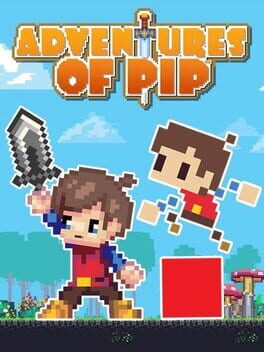
Adventures of Pip
Absorb pixels from defeated foes to evolve Pip through three forms, then devolve again to solve environmental puzzles and overcome the evil queen’s forces.
- AI score · out of 10
- 8.18 / 10
About this game
Adventures of Pip is a side-scrolling platform game built around changing forms. Pip begins as a single pixel in a thirty-two-bit world, but gains the ability to absorb pixels from enemies. His journey takes him against Queen DeRezzia to save his home. Absorbing pixels evolves Pip through three forms, while releasing them causes him to devolve. Their different abilities interact with environmental puzzles, obstacles and enemies. Choosing when to advance and when to return to a simpler form shapes progress through five differently styled worlds.
Recommended games
Related game recommendations on this platform
Wii U


AI review
AI reviews are subjective assessments, not player ratings. See each review for its evidence and limitations.Published date:
GameNavo evidence-led AI editorial review
Adventures of Pip
Thoughtful transformations give this retro platformer a clear identity beyond its familiar rescue story.
Adventures of Pip treats a stronger-looking body as a trade rather than a simple reward. A pixel can float, an agile humanoid can wall-jump, and a sword-bearing form exchanges mobility for other abilities. Working out when to devolve and where to find an enemy that permits evolution becomes part of reading each route. Some sequences combine these decisions in midair, connecting puzzles directly to movement. Hidden villagers and the shops they reopen give exploration a practical purpose, while the gradual introduction of forms provides a sensible learning curve. The restriction on evolving may frustrate players who expect every ability to remain available at any moment. For those who enjoy planning a route and then executing it, that constraint is the source of much of the appeal. The familiar princess-rescue plot mainly keeps the adventure moving.
Strengths
- Distinct forms combine movement and puzzle decisions
- Rescuing villagers supports later upgrades
Weaknesses
- Evolution depends on specific enemies
Who it is for: Platformer players who enjoy route planning and combining movement abilities.
Play notes: Independent judgment based on official information and Greg Dabkey’s 2016 Wii U test, not our own playtest. Model, patch and hours are unspecified. Input observations do not guarantee current frame rate or complete stability.
View scoring basis
| Dimension | Review state | Score | Weight |
|---|---|---|---|
| Dimension Hidden villagers can reopen shops and provide upgrades. Searching side routes feeds back into later progress, giving exploration a useful purpose. | Reviewed | 8.0 / 10 | 0.25 |
| Dimension Floating, wall-jumping and sword forms have distinct uses, while upgrades depend on specific enemies. Transformations make route planning part of the platforming challenge. | Reviewed | 8.4 / 10 | 0.4 |
| Dimension Distinct forms and recognizable evolution enemies make the visual style functional. Retro scenery and music reinforce a coherent, readable world. | Reviewed | 8.0 / 10 | 0.2 |
| Dimension The Wii U test identifies separate jump, attack and burst inputs, with a hold required to devolve. The layout supports deliberate transformations without establishing a measured frame rate. | Reviewed | 8.1 / 10 | 0.15 |
Review sources
Not provided
Core information
- Developer
- Tic Toc Games
- Publisher
- Tic Toc Games
- Release date
- 2015
- Platforms
- Wii U
- Content kind
- Game
- Release state
- Released
- Region
- Worldwide
- Official website
- Not provided
- Offline minimum players
- Not provided
- Offline maximum players
- Not provided
- Online minimum players
- Not provided
- Online maximum players
- Not provided
- Categories
- Action · Primary genre
- Tags
- 3D GraphicsFast-pacedLinear LevelsReal-time CombatThird PersonSolo-friendlyMain Story Under 10 HoursReplayableExplorationDodgePlatforming
- Supported game languages
- Not provided
- Requires base game
- Not provided
- Standalone
- Not provided
- Age ratings
- Not provided
- Play modes
- Single player
- Perspectives
- Side view
Release editions
- PlayStation 4Worldwide2015
- Wii UWorldwide2015
Game gallery
Sources
Not provided