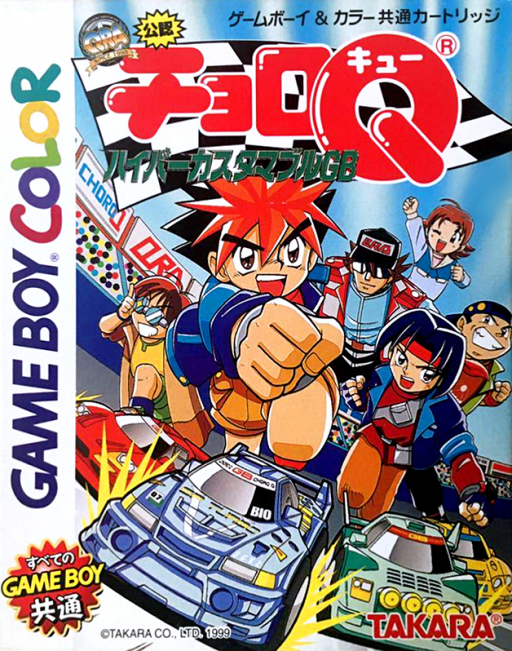
Choro Q - Hyper Customable GB
Choro Q - Hyper Customable GB is a Game Boy Color racing game released in 1999 developed by Eleca. It centers on vehicle control, route judgment, and speed and overtaking management, with controls, information, and pacing arranged around a color handheld screen, a directional pad, and two main action buttons.
- AI score · out of 10
- 6.3 / 10
About this game
Choro Q - Hyper Customable GB is a Game Boy Color racing release centered on vehicle control, route judgment, and speed and overtaking management. Tracks raise pressure through corners, rivals, and time targets, with progress divided into stages, tasks, matches, or growth milestones that make its immediate goals understandable. Its value depends on whether these rules continue to create judgment and room for mastery rather than on campaign length or series recognition. Short campaigns are judged by repeat-challenge value, while longer ones are judged by variety, pacing, and recovery after failure. Speed, track boundaries, and vehicle feedback determine driving readability, while color choices need to distinguish characters, objects, and routes rather than serve as decoration alone. The main genre-specific friction is that draw distance, collision feedback, and steering precision can limit consistency. In addition, battery saves, link cables, cartridge-specific hardware, the unlit display, and regional language can affect the original experience. This description covers only this release and excludes emulator features, modern-port conveniences, and content from other platforms.
Collected in series
Choro Q is best known for racing tiny, exaggerated cars and fitting new parts to change how they drive. Some entries take those cars beyond the track, letting you roam towns, meet other vehicles and earn upgrades through small adventures.
Recommended games
Related game recommendations on this platform
Game Boy Color (GBC)
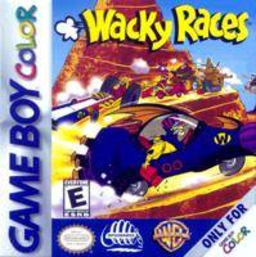
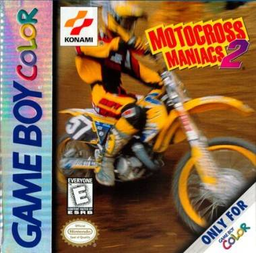
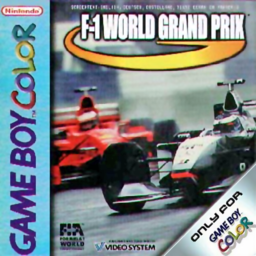
AI review
AI reviews are subjective assessments, not player ratings. See each review for its evidence and limitations.Published date:
A personable handheld racer built around tuning rather than spectacle.
Choro Q Hyper Customable GB ties its races to a parts-building loop. Winning is not simply a matter of steering well: selecting a suitable car setup also matters. Japanese documentation written for this particular handheld game records its race controls and customization options, while an exact-title overview describes the cast and progression. The toy-car personality gives the small-scale presentation considerable charm. The trade-off is that repeated races, money gathering, and returning to the parts menu can slow the rhythm for players who want uninterrupted driving. Its directional-pad racing is approachable on Game Boy Color, but the car-building layer is the reason to stay. This assessment does not import 3D tracks or performance claims from the console Choro Q games.
Strengths
- Parts selection makes race outcomes feel more personal.
Weaknesses
- Replaying races and returning to tuning menus can slow momentum.
Who it is for: Handheld racing fans who enjoy testing car builds between events.
Play notes: Japanese menus and tuning parameters are key barriers; this is not a 3D console Choro Q.
View scoring basis
| Dimension | Review state | Score | Weight |
|---|---|---|---|
| Dimension Characters and events support progression, but races repeat. | Reviewed | 6.1 / 10 | Not provided |
| Dimension Parts choices make race wins feel earned. | Reviewed | 6.6 / 10 | Not provided |
| Dimension Toy-car character is stronger than audiovisual scale. | Reviewed | 6.1 / 10 | Not provided |
| Dimension Handheld driving controls are clear; tuning interrupts quick races. | Reviewed | 6.0 / 10 | Not provided |
Review sources
Not provided
Core information
- Developer
- Eleca
- Publisher
- Takara Tomy
- Release date
- 1999
- Platforms
- Game Boy Color (GBC)
- Content kind
- Game
- Release state
- Released
- Region
- Worldwide
- Official website
- Not provided
- Offline minimum players
- Not provided
- Offline maximum players
- Not provided
- Online minimum players
- Not provided
- Online maximum players
- Not provided
- Categories
- Racing · Primary genre
- Tags
- Top-downDriving and RacingResource ManagementSolo-friendly2D GraphicsFast-paced
- Supported game languages
- Not provided
- Requires base game
- Not provided
- Standalone
- Not provided
- Age ratings
- Not provided
- Play modes
- Single player
- Perspectives
- Top-down
Release editions
- Game Boy Color (GBC)Worldwide1999
Game gallery
Sources
Not provided