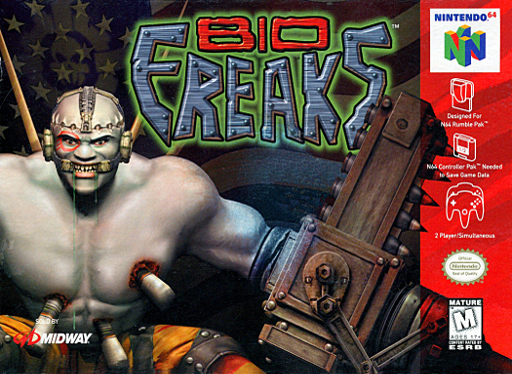
Bio F.R.E.A.K.S.
Bio F.R.E.A.K.S. is a Nintendo 64 fighting game released in 1998 developed by Saffire. It centers on combat encounters, move inputs, and offense-defense reads, with controls, information, and pacing arranged around the analog stick, directional pad, A/B buttons, C buttons, and Z trigger.
- AI score · out of 10
- 6.0 / 10
About this game
Bio F.R.E.A.K.S. is a Nintendo 64 fighting game centered on combat encounters, move inputs, and offense-defense reads. Short bouts use character differences and rising difficulty for variety, with progress divided into stages, tasks, matches, or growth milestones that make its immediate goals understandable. Its value depends on whether these rules continue to create judgment and room for mastery rather than on length, sales, or series recognition. Short campaigns are judged by repeat-challenge value, while longer ones are judged by variety, pacing, and recovery after failure. Animation, hit feedback, and readable arenas create match tension, while 3D scenes, fog, textures, and cartridge audio need to preserve target readability within limited memory and television output. The genre-specific limitation is that button or motion mapping, move recognition, networking, and cpu behavior can affect balance. Platform conditions also include camera control, stick precision, Controller Pak saves, Rumble Pak support, Expansion Pak requirements, and four-player setup can affect original-hardware use. This description covers only this platform release and does not import features from other editions.
Recommended games
Related game recommendations on this platform
Nintendo 64
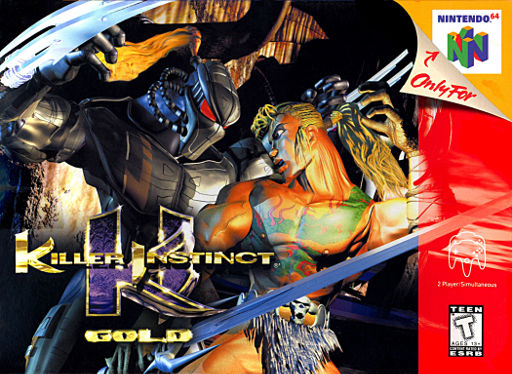
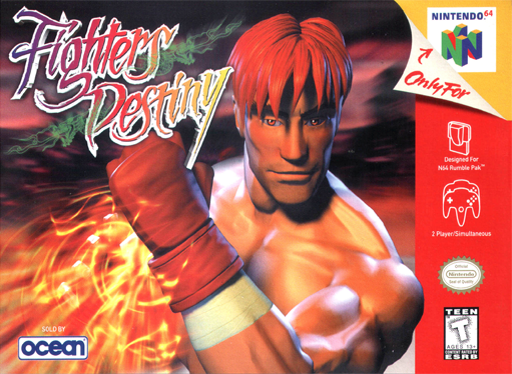
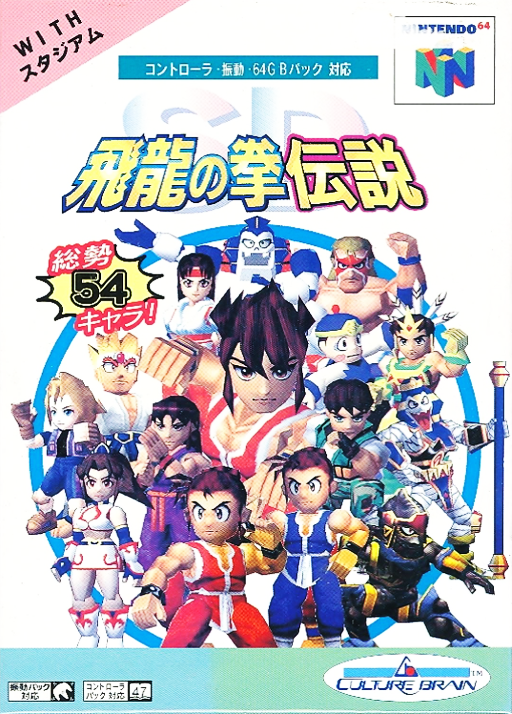
AI review
AI reviews are subjective assessments, not player ratings. See each review for its evidence and limitations.Published date:
Inventive arenas outpace the depth and N64 handling.
Bio F.R.E.A.K.S. on Nintendo 64 puts eight cybernetic fighters into multi-level arenas where they can take to the air rather than simply circle on a flat floor. That spatial premise and the arena hazards make an unusual first impression. Lighting, animation and techno music also establish a suitably abrasive science-fiction identity. Repeated matches reveal a thinner combat system, however: the fighters do not develop enough distinct strategic choices to turn vertical movement into lasting competitive depth. The direct N64 review also finds that the optional first-person perspective makes judging distance harder, while close-range controls lack the sharp response demanded by this style of fight. This assessment concerns the Nintendo 64 release only; it does not claim the PlayStation edition handles the same way. Collectors of experimental nineties fighters may enjoy its oddity, but players seeking a polished and durable competitive game should temper expectations.
Strengths
- Flight and layered arenas are distinctive.
Weaknesses
- Thin fighter strategy and awkward first-person distance cues.
Who it is for: Collectors of experimental nineties fighters.
Play notes: N64 findings are not transferred to PlayStation.
View scoring basis
| Dimension | Review state | Score | Weight |
|---|---|---|---|
| Dimension 新意消耗很快。 | Reviewed | 5.8 / 10 | Not provided |
| Dimension 立体移动新鲜,深度有限。 | Reviewed | 6.1 / 10 | Not provided |
| Dimension 视听比系统更鲜明。 | Reviewed | 6.4 / 10 | Not provided |
| Dimension 视角与手感拖累。 | Reviewed | 5.6 / 10 | Not provided |
Review sources
Not provided
Core information
- Developer
- Saffire
- Publisher
- Midway
- Release date
- 1998
- Platforms
- Nintendo 64
- Content kind
- Game
- Release state
- Released
- Region
- Worldwide
- Official website
- Not provided
- Offline minimum players
- Not provided
- Offline maximum players
- Not provided
- Online minimum players
- Not provided
- Online maximum players
- Not provided
- Categories
- Fighting · Primary genre
- Tags
- ReplayableMelee CombatPlayer versus PlayerReal-time Combat3D GraphicsCombosSolo-friendlyFast-pacedShort SessionsMain Story Under 10 Hours
- Supported game languages
- Not provided
- Requires base game
- Not provided
- Standalone
- Not provided
- Age ratings
- Not provided
- Play modes
- Single playerMultiplayer
- Perspectives
- Side view
Release editions
- PlayStationWorldwide1998
- Nintendo 64Worldwide1998
Game gallery
Sources
Not provided