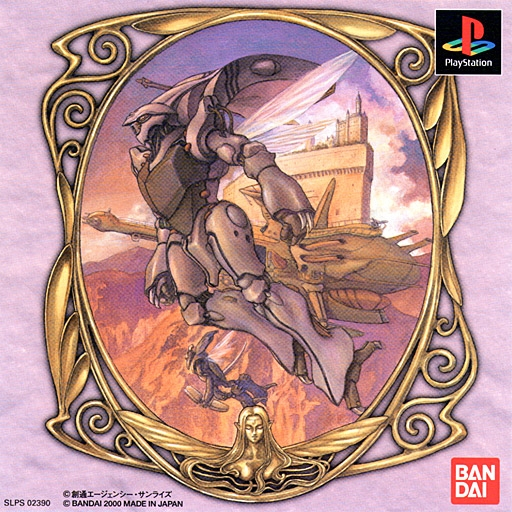
Aura Battler Dunbine - Seisenshi Densetsu
Aura Battler Dunbine - Seisenshi Densetsu is a PlayStation strategy game released in 2000 developed by Bandai. It centers on turn-based tactical decisions, battlefield assessment, and unit or resource management, with controls and information arranged around the directional pad, shoulder and face buttons, plus DualShock twin analog sticks and vibration where supported.
- AI score · out of 10
- 7.1 / 10
About this game
Aura Battler Dunbine - Seisenshi Densetsu is a PlayStation strategy game centered on turn-based tactical decisions, battlefield assessment, and unit or resource management. Missions add map constraints, new rules, and tougher opposition, with progress divided into stages, tasks, matches, or growth milestones that make immediate goals understandable. Its value depends on whether these rules continue to create judgment and room for mastery rather than on length, sales, or series recognition. Short campaigns are judged by repeat-challenge value, while longer ones are judged by variety, pacing, and recovery after failure. Maps, unit states, and action feedback determine whether complex situations remain readable, while early 3D graphics, pre-rendered backgrounds, CD audio, and full-motion video need to preserve targets and interface readability on a television. The genre-specific limitation is that tutorial depth, dense menus, controller pointing, and long scenarios increase the learning curve. Platform conditions also include disc loading, Memory Card saves, regional video standards, digital or analog control support, vibration, and dedicated peripherals affect original-hardware use. This description covers only this platform release and does not import features or conveniences from remasters, emulators, or other console editions.
Recommended games
Related game recommendations on this platform
PlayStation
AI review
AI reviews are subjective assessments, not player ratings. See each review for its evidence and limitations.Published date:
Story intervention and mecha presentation serve fans, but slow exchanges and hidden branches limit comfort.
Entering the anime timeline as a different protagonist is more interesting than simply replaying its episodes. Recruitment, choices and developing the player's own machines give familiar characters and conflicts alternative possibilities, with a satisfying rise from weak early forces. Durable enemies are the main problem: several attacks are often needed to finish an exchange. Polygon animations have appeal, yet repeated viewing stretches progression, especially early on. Hidden routes are not intuitive, and similarly equipped units require distinctive leader gear to remain easy to identify. Anime music, recognizable mechanical effects and movie viewing evoke the source effectively, while character speech is relatively sparse. Fans willing to investigate routes and build their forces should find worthwhile material. Players primarily wanting brisk tactical battles may not find the adaptation's affection sufficient compensation for the waiting.
Strengths
- Original intervention, recruitment and force development offer a different fan experience.
- Mecha motion, signature effects, anime music and movie viewing support atmosphere.
Weaknesses
- Durable enemies and repeated animation slow early battles.
- Hidden routes, similar unit appearances and sparse speech reduce clarity.
Who it is for: Japanese Dunbine fans willing to investigate routes and develop their forces.
Play notes: Expect repeated attacks per exchange. Distinguish similar machines through equipment and prepare for opaque recruitment/branch conditions.
View scoring basis
| Dimension | Review state | Score | Weight |
|---|---|---|---|
| Dimension An original intervention and recruitment branches reward replay, but hidden conditions complicate discovery. | Reviewed | 7.8 / 10 | Not provided |
| Dimension Force development and rear attacks offer choices, but durable enemies drag exchanges into repetition. | Reviewed | 6.5 / 10 | Not provided |
| Dimension Mecha motion, signature effects and anime music establish the world, though character speech is sparse. | Reviewed | 8.1 / 10 | Not provided |
| Dimension Audio and viewing options are useful, but similar machines require extra attention to identification. | Reviewed | 6.4 / 10 | Not provided |
Review sources
Not provided
Core information
- Developer
- Bandai
- Publisher
- Bandai
- Release date
- 2000
- Platforms
- PlayStation
- Content kind
- Game
- Release state
- Released
- Region
- Worldwide
- Official website
- Not provided
- Offline minimum players
- Not provided
- Offline maximum players
- Not provided
- Online minimum players
- Not provided
- Online maximum players
- Not provided
- Categories
- Strategy & Tactics · Primary genre
- Tags
- Long-term ProgressionMain Story 20–50 HoursTop-downResource ManagementSlow BurnCommand-based CombatReplayable3D GraphicsTurn-based TacticsAnime StyleSolo-friendly
- Supported game languages
- Not provided
- Requires base game
- Not provided
- Standalone
- Not provided
- Age ratings
- Not provided
- Play modes
- Not provided
- Perspectives
- Not provided
Release editions
- PlayStationWorldwide2000
Game gallery
Sources
Not provided