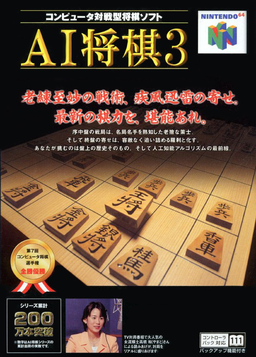
AI Shougi 3
AI Shougi 3 is a Nintendo 64 card and board game released in 1998 developed by ASCII Corporation. It centers on card or board-game rules, local multiplayer or cooperative interaction, and rules interaction, with controls, information, and pacing arranged around the analog stick, directional pad, A/B buttons, C buttons, and Z trigger.
- AI score · out of 10
- 6.2 / 10
About this game
AI Shougi 3 is a Nintendo 64 card and board game centered on card or board-game rules, local multiplayer or cooperative interaction, and rules interaction. Matches, decks, or board objectives create a repeatable strategy loop, with progress divided into stages, tasks, matches, or growth milestones that make its immediate goals understandable. Its value depends on whether these rules continue to create judgment and room for mastery rather than on length, sales, or series recognition. Short campaigns are judged by repeat-challenge value, while longer ones are judged by variety, pacing, and recovery after failure. Card, board, and state readability determine usability, while 3D scenes, fog, textures, and cartridge audio need to preserve target readability within limited memory and television output. The genre-specific limitation is that rules terminology, opponent pacing, interface design, and text density raise the entry barrier. Platform conditions also include camera control, stick precision, Controller Pak saves, Rumble Pak support, Expansion Pak requirements, and four-player setup can affect original-hardware use. This description covers only this platform release and does not import features from other editions.
Collected in series
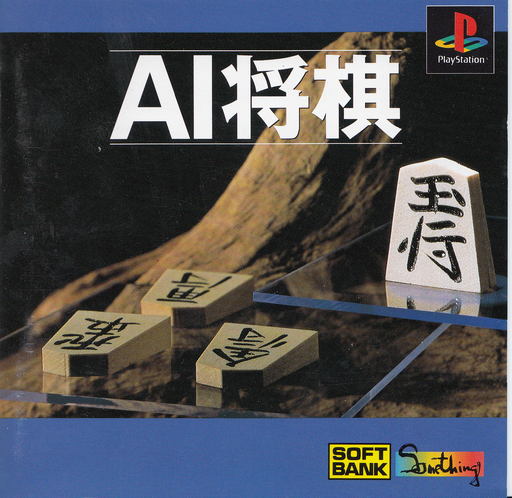
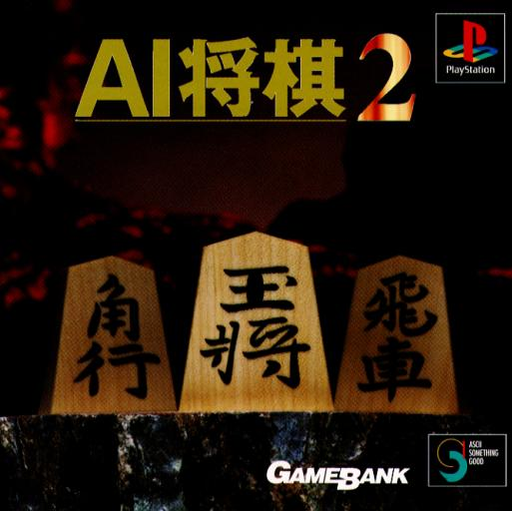
AI Shougi offers a computer opponent for a quiet game of Japanese chess. You read threats, protect your king and look for the move that turns the position around. Across its console and computer releases, adjustable opponents and edition-specific practice tools give you different ways to work on your play.
Recommended games
Related game recommendations on this platform
Nintendo 64



AI review
AI reviews are subjective assessments, not player ratings. See each review for its evidence and limitations.Published date:
Useful position practice and spoken moves with incomplete rules and constrained review.
AI Shogi 3 suits players happy to concentrate on the board. Handicaps, computer levels and position editing create different practice situations, while the opponent can build familiar defensive formations. Spoken moves and a tatami background lend the matches a welcoming shogi-room character. However, failure to recognize repetition affects rules completeness rather than merely changing difficulty. Its main functions remain playing and editing positions, with unlimited thinking time narrowing the available practice formats. Move indicators and warnings help explain operations, but reviewing games needs preparation: without a Controller Pak, a completed game cannot be revisited, and saved data requires 111 pages. It is best for readers of Japanese piece names who enjoy setting up their own studies. The “professional” difficulty label should not be taken as a promise of expert strength.
Strengths
- Handicaps, strengths and position editing support focused practice.
- Spoken moves and the tatami background create a welcoming setting.
Weaknesses
- Repetition is not recognized, time controls are unlimited, and reviewing finished games depends on storage.
Who it is for: Shogi players who read Japanese pieces and enjoy setting up positions.
Play notes: Original Japanese N64 release; saving needs 111 Controller Pak pages, and review is limited without it.
View scoring basis
| Dimension | Review state | Score | Weight |
|---|---|---|---|
| Dimension Several strengths and handicaps support practice, but unlimited time and the narrow mode structure limit its range. | Reviewed | 5.7 / 10 | Not provided |
| Dimension Handicaps, position editing and recognizable defensive formations support play, but failure to recognize repetition weakens rules completeness. | Reviewed | 6.5 / 10 | Not provided |
| Dimension Spoken moves and a tatami background create a welcoming shogi setting, with presentation centered on the board. | Reviewed | 6.0 / 10 | Not provided |
| Dimension Move indicators and warnings help navigation, while the substantial Controller Pak allocation complicates saving. | Reviewed | 6.4 / 10 | Not provided |
Review sources
Not provided
Core information
- Developer
- ASCII
- Publisher
- ASCII
- Release date
- 1998
- Platforms
- Nintendo 64
- Content kind
- Game
- Release state
- Released
- Region
- Worldwide
- Official website
- Not provided
- Offline minimum players
- Not provided
- Offline maximum players
- Not provided
- Online minimum players
- Not provided
- Online maximum players
- Not provided
- Categories
- Card & Tabletop · Primary genre
- Tags
- Turn-based TacticsSlow BurnBoard and Tabletop PlayPlayer versus Player3D GraphicsCard Play
- Supported game languages
- Not provided
- Requires base game
- Not provided
- Standalone
- Not provided
- Age ratings
- Not provided
- Play modes
- Not provided
- Perspectives
- Not provided
Release editions
- Nintendo 64Worldwide1998
Game gallery
Sources
Not provided