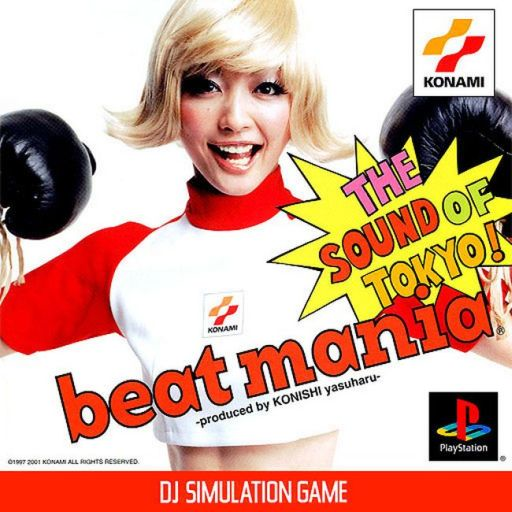
Beat Mania - The Sound of Tokyo
Beat Mania - The Sound of Tokyo is a PlayStation music and rhythm game released in 2001 developed by Konami. It centers on music, rhythm, and performance, beat recognition, and button or peripheral timing, with controls and information arranged around the directional pad, shoulder and face buttons, plus DualShock twin analog sticks and vibration where supported.
- AI score · out of 10
- 6.7 / 10
About this game
Beat Mania - The Sound of Tokyo is a PlayStation music and rhythm game centered on music, rhythm, and performance, beat recognition, and button or peripheral timing. Songs and difficulty tiers support short repeated practice, with progress divided into stages, tasks, matches, or growth milestones that make immediate goals understandable. Its value depends on whether these rules continue to create judgment and room for mastery rather than on length, sales, or series recognition. Short campaigns are judged by repeat-challenge value, while longer ones are judged by variety, pacing, and recovery after failure. Music, input prompts, and synchronized performance carry the appeal, while early 3D graphics, pre-rendered backgrounds, CD audio, and full-motion video need to preserve targets and interface readability on a television. The genre-specific limitation is that calibration, input latency, peripheral conditions, and dense charts can affect precision. Platform conditions also include disc loading, Memory Card saves, regional video standards, digital or analog control support, vibration, and dedicated peripherals affect original-hardware use. This description covers only this platform release and does not import features or conveniences from remasters, emulators, or other console editions.
Collected in series
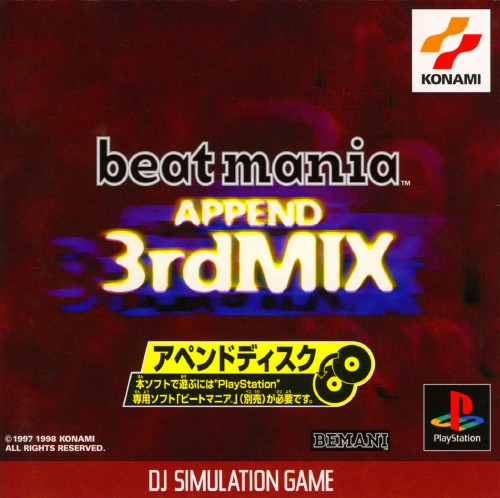
beatmania puts you behind a DJ-style set of keys and a turntable, matching falling notes with presses and scratches. Its different branches change the controls, but the pleasure stays close to the music: hearing a phrase come together as your timing improves.
Recommended games
Related game recommendations on this platform
PlayStation
AI review
AI reviews are subjective assessments, not player ratings. See each review for its evidence and limitations.Published date:
Helpful practice and settings around a narrow, less engaging repertoire.
Five keys and a turntable still give timing decisions direct participation, and forgiving Good-hit combos help practice feel rewarding. Sound of Tokyo is less convincing when its charts seem to accompany the music rather than let you build it. Thirteen tracks across three difficulties, selectable songs and continuous courses provide challenges, but the narrow repertoire relies heavily on repeated refinement. Its learning tools are more thoughtful: sections can repeat, auto-scratch separates turntable demands, and lane colors, judgment placement and normal-controller mappings are adjustable. Those options reduce the burden of reading notes while learning unfamiliar inputs. Song previews and polished, lively background animation give the package personality. It best suits players attracted to this particular musical selection and happy to study a small library, with either a dedicated controller or a standard pad.
Strengths
- Section repetition, auto-scratch and adjustable lanes support staged practice.
- Song previews and polished background animation give distinctive personality.
Weaknesses
- A narrow repertoire and weaker chart-to-song integration reduce the sense of performing.
Who it is for: Rhythm players drawn to this particular selection and willing to refine a small repertoire.
Play notes: Original Japanese PS1 key disc supporting dedicated and normal controllers; not seven-key IIDX, so check interest in its repertoire first.
View scoring basis
| Dimension | Review state | Score | Weight |
|---|---|---|---|
| Dimension Practice and courses offer distinct progression paths, but the narrow repertoire relies on repeated challenge for freshness. | Reviewed | 5.9 / 10 | Not provided |
| Dimension Forgiving combos preserve accomplishment, but weaker chart-to-music integration reduces the sense of performing. | Reviewed | 6.3 / 10 | Not provided |
| Dimension Previews help establish expectations and polished animation gives personality; presentation is more compelling than chart participation. | Reviewed | 7.5 / 10 | Not provided |
| Dimension Auto-scratch separates learning demands, visual settings aid readability, and saving supports continued progression. | Reviewed | 8.3 / 10 | Not provided |
Review sources
Not provided
Core information
- Developer
- Konami
- Publisher
- Konami
- Release date
- 2001
- Platforms
- PlayStation
- Content kind
- Game
- Release state
- Released
- Region
- Worldwide
- Official website
- Not provided
- Offline minimum players
- Not provided
- Offline maximum players
- Not provided
- Online minimum players
- Not provided
- Online maximum players
- Not provided
- Categories
- Music & Dance · Primary genre
- Tags
- ReplayableSolo-friendlyRhythm-based PlayMusic PerformanceMain Story Under 10 HoursPick-up and PlayPlayer versus PlayerShort Sessions3D GraphicsFast-paced
- Supported game languages
- Not provided
- Requires base game
- Not provided
- Standalone
- Not provided
- Age ratings
- Not provided
- Play modes
- Co-opMultiplayerSingle player
- Perspectives
- Not provided
Release editions
- PlayStationWorldwide2001
Game gallery
Sources
Not provided