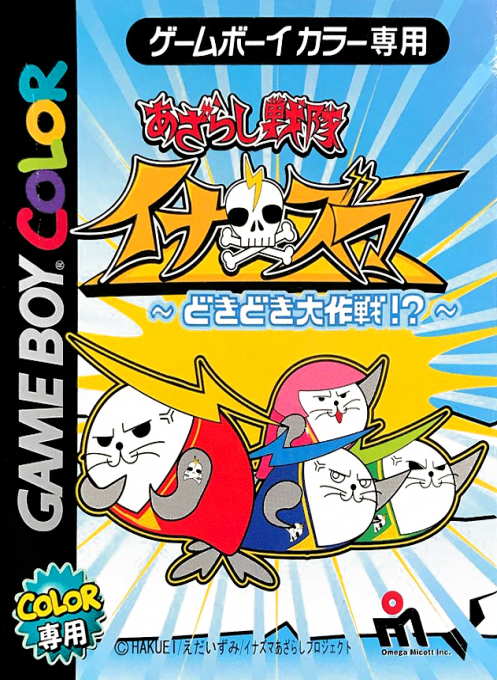
Azarashi Sentai Inazuma - Dokidoki Daisakusen!
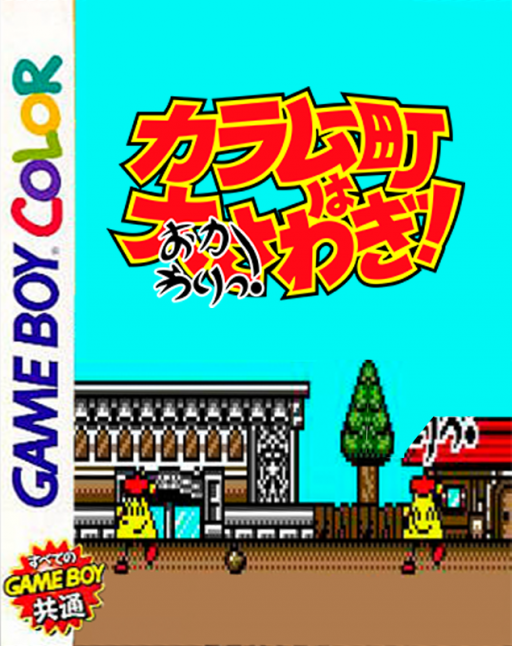
Azarashi Sentai Inazuma - Dokidoki Daisakusen! is a Game Boy Color specialized game released in 2002 developed by Omega Micott Inc.. It centers on theme-specific rule learning, button interaction, and staged objectives, with controls, information, and pacing arranged around a color handheld screen, a directional pad, and two main action buttons.
- AI score · out of 10
- 7.2 / 10
About this game
Azarashi Sentai Inazuma - Dokidoki Daisakusen! is a Game Boy Color specialized release centered on theme-specific rule learning, button interaction, and staged objectives. Content unfolds through exercises, tasks, or staged objectives, with progress divided into stages, tasks, matches, or growth milestones that make its immediate goals understandable. Its value depends on whether these rules continue to create judgment and room for mastery rather than on campaign length or series recognition. Short campaigns are judged by repeat-challenge value, while longer ones are judged by variety, pacing, and recovery after failure. Interface, theme, and feedback establish the work's identity, while color choices need to distinguish characters, objects, and routes rather than serve as decoration alone. The main genre-specific friction is that an unusual genre fit, explanation style, and language can hinder understanding. In addition, battery saves, link cables, cartridge-specific hardware, the unlit display, and regional language can affect the original experience. This description covers only this release and excludes emulator features, modern-port conveniences, and content from other platforms.
Recommended games
Related game recommendations on this platform
Game Boy Color (GBC)
AI review
AI reviews are subjective assessments, not player ratings. See each review for its evidence and limitations.Published date:
Purposeful minigame practice with attractive pixels, but prepare before late saves.
Inazuma connects separate minigames into an adventure built around preparation. Four characters tackle bowling, rhythm, dancing, ramen and crane activities, earning boost cards through high scores. Those cards help with the final shooting, turn-based strategy and card confrontations, giving practice a purpose beyond bigger numbers. The individual activities are well made, although overlapping content makes rotating between them less varied than their names suggest. Solid pixels and windows that appear to move in separate layers give characters and interfaces a distinctive appeal. Late saving needs care: recording progress without adequate equipment can leave advancement in an impasse. It suits solo players who enjoy mastering short activities and preparing for later challenges, rather than anyone expecting an entirely carefree collection requiring no planning.
Strengths
- High-score boost cards give short-session practice a practical role in final confrontations.
- Shooting, strategy and card finales give preparation different concluding goals.
- Solid pixels and apparently layered window animation create a distinctive visual appeal.
Weaknesses
- Overlapping minigame content limits the sustained variety of rotating activities.
- Saving late without adequate equipment can leave progress in an impasse.
Who it is for: Solo players who enjoy mastering short activities, using high-score rewards in later challenges, appreciating pixel and interface animation, and checking equipment preparation.
Play notes: Check equipment preparation before saving late progress; an inadequately prepared record can make further advancement difficult. This assessment concerns the original 2002 GBC game.
View scoring basis
| Dimension | Review state | Score | Weight |
|---|---|---|---|
| Dimension Preparation and three different final challenges give progression a clear destination, and the individual activities are not poorly made. Content basically works, but overlap weakens the variety offered by repeated rotation. This is more consequential than a small count alone: practiced short sessions suit it better than continually expecting new play patterns. | Reviewed | 6.8 / 10 | Not provided |
| Dimension Turning minigame scores into help for the final confrontations gives practice a clear purpose. Well-made short activities connect with card preparation to form a good core. Its value lies in learning activities and accumulating help for later challenges, rather than merely presenting a long-sounding list of events. | Reviewed | 7.6 / 10 | Not provided |
| Dimension Solid pixels and windows that appear to move in separate layers provide a distinct visual strength, with interface animation contributing to the work's style. Presentation is excellent: pixel detail and window movement attract attention together, giving the minigames a memorable visual identity beyond simply rotating activities. | Reviewed | 8.0 / 10 | Not provided |
| Dimension Saving records late progress but can preserve an equipment-related impasse, an important conditional obstacle that makes usability weak. This does not mean every save fails or the game cannot be completed. The key is checking preparation before the late stages rather than treating a progress record as unconditional protection. | Reviewed | 5.7 / 10 | Not provided |
Review sources
Not provided
Core information
- Developer
- Omega Micott
- Publisher
- Omega Micott
- Release date
- 2002
- Platforms
- Game Boy Color (GBC)
- Content kind
- Game
- Release state
- Released
- Region
- Worldwide
- Official website
- Not provided
- Offline minimum players
- Not provided
- Offline maximum players
- Not provided
- Online minimum players
- Not provided
- Online maximum players
- Not provided
- Categories
- Party · Primary genre
- Tags
- Solo-friendlySlow BurnPick-up and PlayMain Story Under 10 HoursShort SessionsFixed CameraPuzzle SolvingLow Entry Barrier2D GraphicsReplayable
- Supported game languages
- Not provided
- Requires base game
- Not provided
- Standalone
- Not provided
- Age ratings
- Not provided
- Play modes
- Not provided
- Perspectives
- Not provided
Release editions
- Game Boy Color (GBC)Worldwide2002
Game gallery
Sources
Not provided