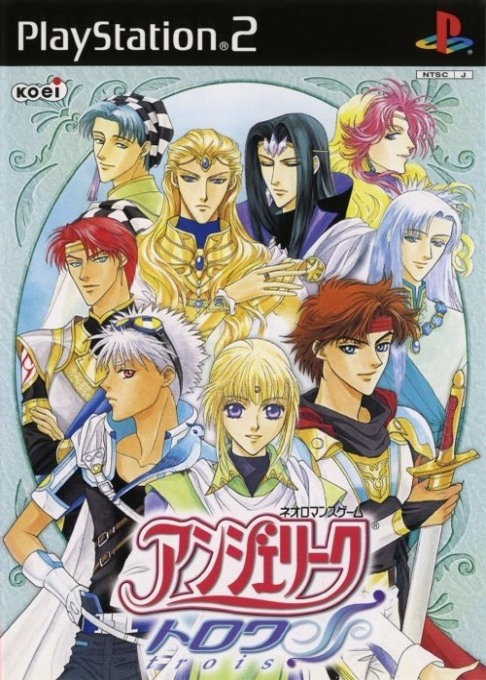
Angelique Trois
Angelique Trois is a PlayStation 2 simulation game released in 2000 developed by Koei Tecmo Games. It centers on story, case, or mission progress, state management, and system learning, with controls and information arranged around the DualShock 2 twin analog sticks, directional pad, shoulder and face buttons, with a dedicated peripheral only where explicitly required.
- AI score · out of 10
- 6.8 / 10
About this game
Angelique Trois is a PlayStation 2 simulation game centered on story, case, or mission progress, state management, and system learning. Schedules, changing values, or staged goals encourage repeated adjustment, with progress divided into stages, tasks, matches, or growth milestones that make immediate goals understandable. Its value depends on whether these rules continue to create judgment and room for mastery rather than on length, sales, or series recognition. Short campaigns are judged by repeat-challenge value, while longer ones are judged by variety, pacing, and recovery after failure. Interface clarity and state feedback matter more than spectacle, while 3D scenes, streamed data, cinematics, surround audio, and interlaced television output need to preserve action and state readability together. The genre-specific limitation is that explanations, dense menus, real-time systems, or accessory dependencies can add friction. Platform conditions also include DVD loading, the 8MB Memory Card, analog sticks and pressure-sensitive buttons, Multitap, Network Adapter, dedicated peripherals, and retired online services affect present-day use. This description covers only this platform release and does not import features or conveniences from remasters, emulators, or other console editions.
Collected in series
Angelique blends fantasy romance with the work of nurturing a world. Asking Guardians for help, making time for personal relationships and deciding how to spend each day bring affection and responsibility into the same adventure.
Recommended games
Related game recommendations on this platform
PlayStation 2


AI review
AI reviews are subjective assessments, not player ratings. See each review for its evidence and limitations.Published date:
Romance and land development work well together, but long routes and slow interaction hurt repeat play.
The original PlayStation 2 Angelique Trois brings Queen Angelique and a large returning cast to the mysterious land of Arcadia. Its romance is not just a set of dialogue choices: visiting a character, requesting help with development, studying and replenishing power all compete for time and feed into relationships and endings. That interplay gives the day-to-day decisions more substance than a straightforward visual novel. Familiar Guardians, teachers and collaborators, seasonal events and varied conclusions offer many reasons for series fans to continue. The mystery around Arcadia lends the routine a narrative purpose as well. Yet each route asks the player to repeat a substantial amount of development and travel. Without the earlier queen-test rivalry, the cycle can lose urgency on later runs. Three-dimensional dates were a novel presentation choice, and some ending illustrations reward persistence, but the visual finish is uneven. Detailed PS2 play notes describe slow field movement and animation settings that remove only part of the repeated effects; partial scene skipping does not fully solve the pace. This is most rewarding as a patient character-and-schedule simulation, less so as a quick route-based story. The score is for the original Japanese 2000 release. Additional romance voice work and improved animation advertised for the later Aizōban are not credited to it.
Strengths
- Development and romance make the schedule meaningful
- Large returning cast and seasonal events give routes character
- Arcadia's mystery supports the relationship structure
Weaknesses
- Lengthy development repeats across routes
- Slow movement and only partial skipping extend each run
- 3D character presentation is uneven
Who it is for: Series fans who enjoy deliberate scheduling and character-led romantic simulation.
Play notes: Japanese original only; the later enhanced edition's extra voices and animation are excluded.
View scoring basis
| Dimension | Review state | Score | Weight |
|---|---|---|---|
| Dimension Returning characters and seasonal events offer breadth, but repeated development makes later routes slow. | Reviewed | 6.2 / 10 | Not provided |
| Dimension Development and romance interlock into real scheduling choices, though daily tasks can become routine. | Reviewed | 7.3 / 10 | Not provided |
| Dimension Arcadia and familiar characters carry the mood; 3D dates are novel but visually uneven. | Reviewed | 7.2 / 10 | Not provided |
| Dimension Some scenes can be skipped, but slow movement and repeated effects make PS2 interaction laborious. | Reviewed | 5.8 / 10 | Not provided |
Review sources
Not provided
Core information
- Developer
- Koei Tecmo Games
- Publisher
- Koei Tecmo Games
- Release date
- 2000
- Platforms
- PlayStation 2
- Content kind
- Game
- Release state
- Released
- Region
- Worldwide
- Official website
- Not provided
- Offline minimum players
- Not provided
- Offline maximum players
- Not provided
- Online minimum players
- Not provided
- Online maximum players
- Not provided
- Tags
- Slow BurnSolo-friendlyStory-drivenCozyLong-term Progression3D GraphicsResource ManagementLife SimulationThird PersonMain Story 20–50 HoursReplayable
- Supported game languages
- Not provided
- Requires base game
- Not provided
- Standalone
- Not provided
- Age ratings
- Not provided
- Play modes
- Single player
- Perspectives
- Not provided
Release editions
- PlayStation 2Worldwide2000
Game gallery
Sources
Not provided