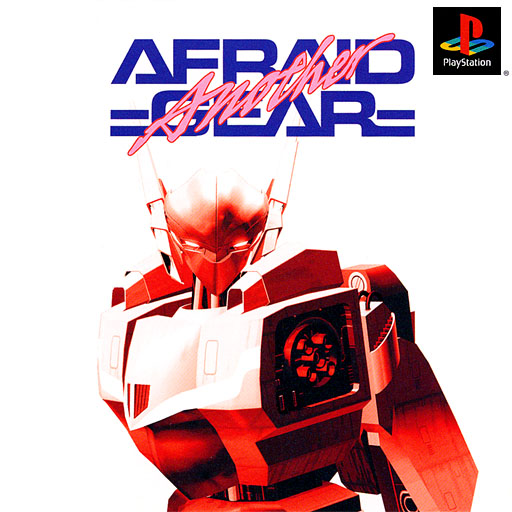
Afraid Gear Another
Afraid Gear Another is a PlayStation simulation game released in 2001 developed by Cooking Mama Limited. It centers on state management, system learning, and repeated adjustment and feedback, with controls and information arranged around the directional pad, shoulder and face buttons, plus DualShock twin analog sticks and vibration where supported.
- AI score · out of 10
- 7.8 / 10
About this game
Afraid Gear Another is a PlayStation simulation game centered on state management, system learning, and repeated adjustment and feedback. Schedules, changing values, or staged goals encourage repeated adjustment, with progress divided into stages, tasks, matches, or growth milestones that make immediate goals understandable. Its value depends on whether these rules continue to create judgment and room for mastery rather than on length, sales, or series recognition. Short campaigns are judged by repeat-challenge value, while longer ones are judged by variety, pacing, and recovery after failure. Interface clarity and state feedback matter more than spectacle, while early 3D graphics, pre-rendered backgrounds, CD audio, and full-motion video need to preserve targets and interface readability on a television. The genre-specific limitation is that explanations, dense menus, real-time systems, or accessory dependencies can add friction. Platform conditions also include disc loading, Memory Card saves, regional video standards, digital or analog control support, vibration, and dedicated peripherals affect original-hardware use. This description covers only this platform release and does not import features or conveniences from remasters, emulators, or other console editions.
Recommended games
Related game recommendations on this platform
PlayStation

AI review
AI reviews are subjective assessments, not player ratings. See each review for its evidence and limitations.Published date:
Tuning and heat management reward experimentation, with purposeful competitions but dense status text.
Afraid Gear Another puts the appeal in building a machine and watching it compete rather than steering every movement. Parts and six weapon positions combine with firing timing and reactor shifts; overheating interrupts sustained attacks, making maximum firepower insufficient by itself. League points, top-eight knockouts and promotion give tuning experiments a direction, while challenges, bar exchanges and rare wager rewards offer other goals. Later newcomers and equipment changes invite further tests. Rule, prize, field and opponent panels organize competitions, and portraits and recognizable robots establish their setting. Radar, time and component displays have dedicated areas, but dense small green text demands attention. Separate menu controls and tutorial help support preparation. This suits players who enjoy testing builds and autonomous battles and will learn Japanese terminology.
Strengths
- Firing timing, reactor use and overheating make construction choices matter during competition.
- League promotion, challenges and wager rewards give continued tuning purposeful goals.
- Grouped conditions, opponent portraits and separated battle panels organize competition information.
Weaknesses
- Dense small green labels and values require careful reading of detailed battle status.
Who it is for: Players who enjoy constructing robots, testing weapons and heat-management combinations, and observing autonomous contests, while learning Japanese rules.
Play notes: This covers the 2001 Japanese PS1 SLPM-86834 sequel, not the first game. Use D-pad to choose actions, Circle to confirm, X to cancel and Square for the battle menu. Consult tutorial and help; prepare two card blocks. Movement is autonomous, so watch firing timing and cooling after overheating.
View scoring basis
| Dimension | Review state | Score | Weight |
|---|---|---|---|
| Dimension League points, knockout promotion and challenges give repeated tuning a purpose, while shops, bar exchanges and rare wager rewards broaden acquisition routes, making the content good overall. Higher-level opponents and changed equipment invite further experimentation. Difficulty testimony is individual; one player's later impasse does not establish an unfair campaign. | Reviewed | 7.8 / 10 | Not provided |
| Dimension Parts, weapons, firing timing and reactor shifts interact, while overheating forces a trade-off between attacks and continued action, producing an excellent core. Building a robot and seeing its competition results connects preparation with battle. Autonomous movement serves this design: the appeal lies in tuning and timed attacks, not steering every step. | Reviewed | 8.1 / 10 | Not provided |
| Dimension Robot silhouettes, arenas and opponent portraits establish the competition, with narration and grouped data giving good presentation overall. A conspicuous hit indicator emphasizes combat results. Dense small green labels and values remain a limitation, requiring attention to both the main scene and detailed status panels. | Reviewed | 7.2 / 10 | Not provided |
| Dimension Distinct confirmation, cancellation and battle-menu controls, tutorial and help access, and grouped pre-match conditions give good usability. Learning the Japanese terminology and menu locations, and preparing two memory-card blocks, supports an orderly approach to tuning and entering competitions. | Reviewed | 7.6 / 10 | Not provided |
Review sources
Not provided
Core information
- Developer
- Cooking Mama
- Publisher
- Cooking Mama
- Release date
- 2001
- Platforms
- PlayStation
- Content kind
- Game
- Release state
- Released
- Region
- Worldwide
- Official website
- Not provided
- Offline minimum players
- Not provided
- Offline maximum players
- Not provided
- Online minimum players
- Not provided
- Online maximum players
- Not provided
- Categories
- Strategy & Tactics · Primary genre
- Tags
- Main Story 20–50 HoursLong-term ProgressionCozySlow BurnResource ManagementReplayableLife SimulationThird Person3D GraphicsSolo-friendly
- Supported game languages
- Not provided
- Requires base game
- Not provided
- Standalone
- Not provided
- Age ratings
- Not provided
- Play modes
- Not provided
- Perspectives
- Not provided
Release editions
- PlayStationWorldwide2001
Game gallery
Sources
Not provided